What Agnes Gund Understood About the Power of Art
While many art collectors set about building empires of ownership, Agnes Gund spent her life building bridges. Gund, affectionately known as “Aggie” by those who were close to her, instinctively knew that collecting is not simply about acquiring beauty, but about widening the aperture of who gets to be seen, heard, remembered, and valued.
Before her death on September 18th at the age of 87, Gund pulled the levers of her privilege and resources to support women, artists of color, and those working beyond the narrow perimeters of the mainstream art world. Her storied collection was an expansive survey of modern and contemporary art, broadcasting a vision of art as a more democratic space.
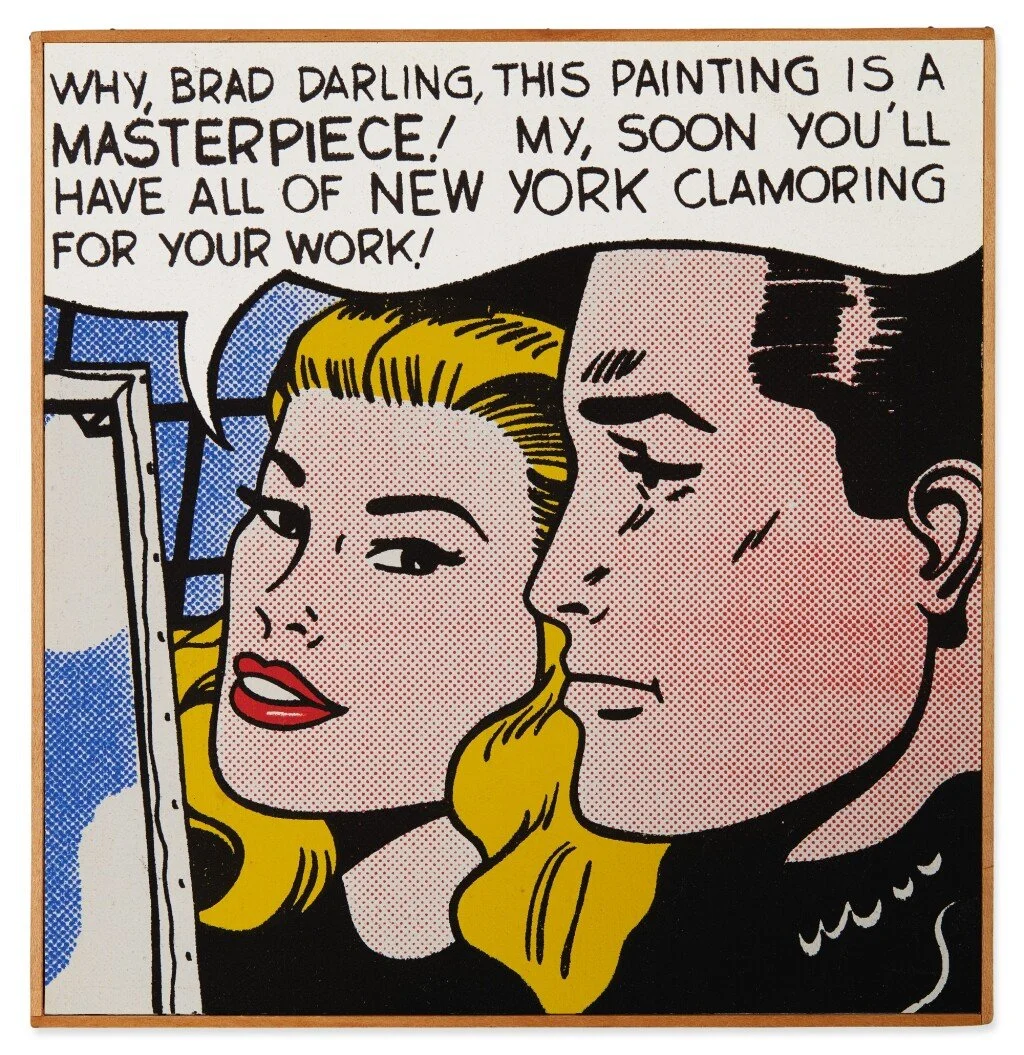
The painting you see above played a pivotal role in shaping Gund’s place as a powerful changemaker in the art space. In 2017, Gund decided to sell Roy Lichtenstein’s 1962 Masterpiece for $165 million, making it one of the most expensive artworks ever sold by a living collector.
But instead of banking the windfall, she used it to seed the launch of the Art for Justice Fund, an initiative dedicated to dismantling mass incarceration in the U.S. During its run (the organization closed its doors in 2023), the fund granted well over $100 million to community-led organizations and artists who are reimagining a more equitable justice system. With that single act, Gund proved that art can have power beyond the walls of a museum.
Her vision extended beyond philanthropy. She spent her life pushing institutions to be more inclusive, whether through her longtime role at the Museum of Modern Art, her work funding scholarships for young artists, or her tireless insistence on acquisitions that expand on the narratives that museums share with the world. She saw art as an active responsibility, not a passive blue-chip luxury.
Gund’s legacy is multi-layered and is sure to be explored in the coming weeks and months, with her influence felt not just in the halls of MoMA, but in communities around the country. She reminds us that creativity underpins a fully realized society.
Suppose we want a better society– one that is more compassionate, more intellectually aware, and more connected. In that case, it’s important to realize that the path runs straight through artists’ studios, restaurant kitchens, performance stages, and the solitary quiet of writers’ rooms. Agnes Gund knew that art was not separate from the realities of our world, but deeply entwined with them.