

Questions of Practice: Maggie Hennessy, Food Writer and Author
For Maggie Hennessy, words do more than describe food; they animate it. A sip can feel prickly, a pool of oil can turn cinematic, a dumpling can arrive with the drama of a curtain rising. In her work, language is not simply a vehicle for service or recommendation, but a sensory instrument, capable of transforming appetite into story and observation into atmosphere. It makes her an especially compelling voice for this issue’s exploration of Words: how language shapes experience, sharpens perception, and gives texture to the things we think we already know.
A longtime food and drink writer whose work spans criticism, reportage, and cultural observation, Maggie has built a singular practice around the overlooked details of how we eat and behave. Her essays often begin in the familiar: a burger, a martini, an oyster, the choreography of brunch (or not), and open outward into questions of ritual, class, desire, humor, and the strange emotional lives of objects. Her new book, The Burger Bible, takes one of the most ubiquitous foods in American culture and uses it as a lens for history, identity, migration, pleasure, and myth.
For our first installment of Questions of Practice, we spoke with Maggie about the craft of writing the sensory world, the discipline of finding fresh language for familiar tastes, the changing state of food writing, and why the right sentence should do what the best meals do: surprise, linger, and make you want more.
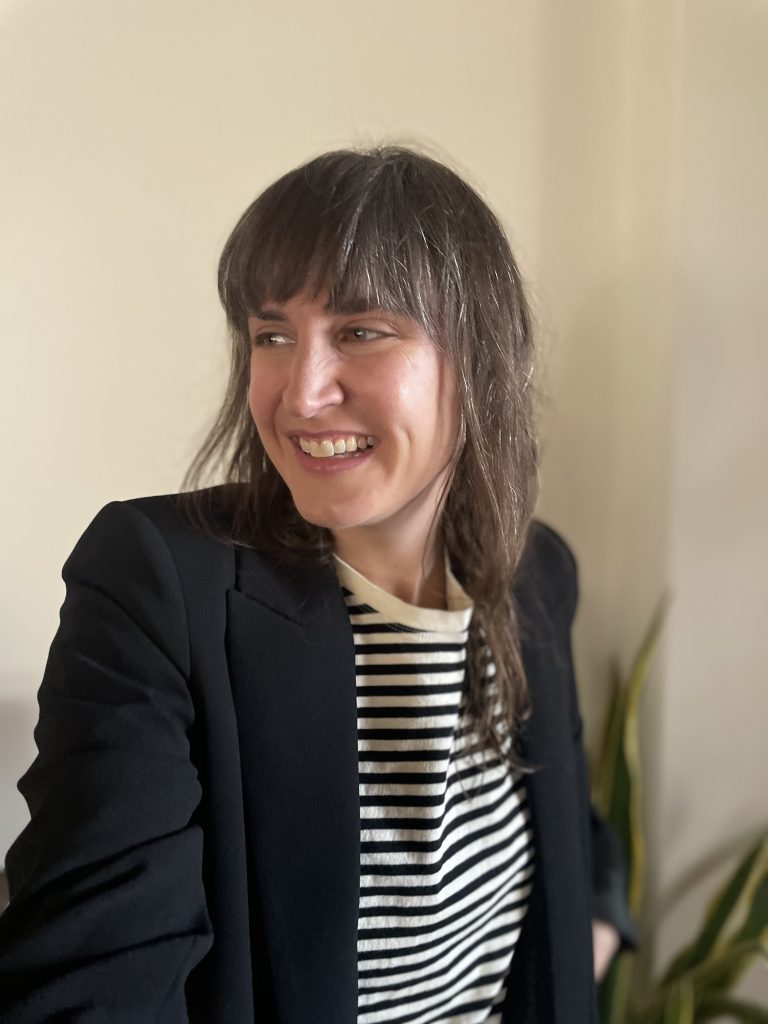
Food writing often touches criticism, storytelling, and reportage. How do you define what you do on the page?
Someone once described me as an observational comic through a food and drink lens, which I appreciated.
Food writing has a formula; it’s often service-driven. How to make X dish, why Y is trending, or where one should go for brunch (the correct answer is breakfast). I can’t escape this. Still, I like finding odd or interesting entry points to what you might call a trend story: the romance and hubris of tending to real candles in restaurants, why lettuce leaves in salads are suddenly huge and unwieldy. It’s fun and disarming to anthropomorphize ingredients and food-related ephemera. I like it best when the dirty martini or the oyster is the main character, and the humans chase it around, fixing its train, rouging its cheeks, etc.
I do like human beings! They’re almost always the real story. But I prefer meeting them where they’re at when they come to the table, place their coffee order, buy groceries, or belly up at the bar. Why do restaurant goers seem particularly, ummm, feral since COVID? Do young generations still raise their glasses to toast? What does a morning rush feel and sound like at Dunkin’ Donuts? Why do we loathe our modern refrigerators?
Where freelance, consumer-facing writing has taken me that’s interesting, is I attempt to prove out the creative nonfiction style of food writing I love on mainstream platforms over and over. It’s a satisfying sort of high-wire act, in that each idea has to be singularly good and a little odd. I’m constantly afraid I’ll crash out. (I recently had coffee with a writer who told me I should get it over with and try to write a novel, because I’m probably suppressing some bigger, hairier creative beast. I think she’s right.)
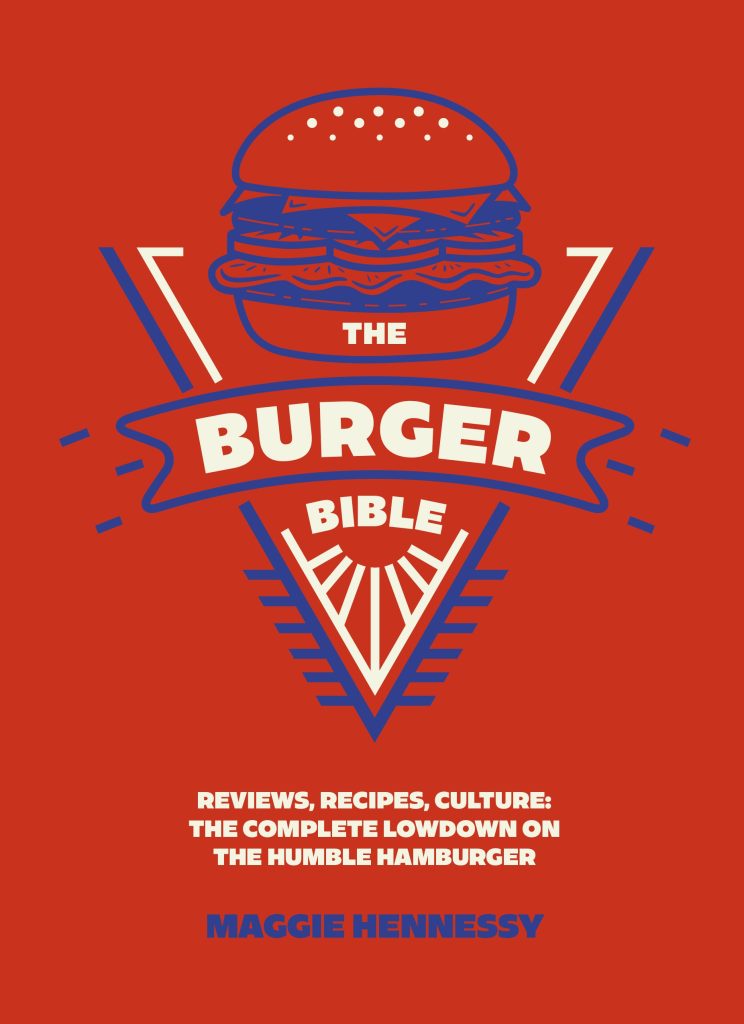
Your new book, The Burger Bible, takes a familiar subject and reframes it with depth. What drew you to that topic, and what did you want to uncover beneath the surface?
What drew me to this subject right away was its affability, ubiquity, (usual) affordability, and versatility. It’s also so American, and thus a fascinating vehicle for storytelling about this country, for better and worse. We love beef and convenience, and can’t live without our cars. There’s the pervasive immigrant experience and the enduring bootstraps myth, the ways we happily spurn dogma where food is concerned. I’m not here to preach; it’s a gifty book at its heart that you pull out to share a bit of burger love, lore, and trivia. But I selected the history and many of the profile stories with the hope of providing context and carving out space for empathy and maybe a little reflection. It’s also a frothy and silly good time, like me.
What does good food writing require now that it didn’t ten years ago?
This is a hard question for me, because “good” is connected to a reward system that’s complicated and agenda-riddled. I do think there’s a focus now in the oh-so-trendy food newsletter space on acerbic, voicey reporting—like to be relevant, one must be in the know and talk shit about the top brass over glacial (maybe N/A?) martinis at the Chelsea Hotel.
The contrarian, new-look, jaggedy fonted “gourmet” comes to mind. I bought a subscription right away. I love aspects of it, that it’s ballsy and writer-owned, that it calls out its own missteps almost in real time. It’s publishing great writers and writing. But I’m still not sure I’m the audience for it. Maybe I’m aging out, but I miss subtlety. I’d like to see more archness, more winks, more … slowness. Everything punches us in the face, kind of like overly designed restaurants with flavormaxxing food.
What’s fascinating is the relentless tension of food (a.k.a. lifestyle) content that keeps butting up against genuinely complex, systemic, and increasingly unavoidable issues that people still really don’t want to talk (or read) much about: income inequality, worker abuse, climate change and displacement, and mass deportation of workers on whom much of this system depends. Can we just get Ina Garten’s go-to roast chicken recipe?

I think to be good you have to bravely hold all that at once, to entertain and give people enough credit to sit with a piece of writing and actually engage their brains. More importantly, to be good, you have to care about the craft (capital C!) of writing—nurture it, practice it daily, challenge it to stay relevant in a time that is quite hostile to it. Make the reader positively voracious so they can’t help but finish it. No pressure, right? Good editors help, and many of them are stretched far too thin. You know what else helps? Investment in good writing from people who believe in preserving it.
When you’re writing about something sensory like taste or texture, what does language need to do differently?
This is my favorite part of the process. Food writing is very sensual, which, hilariously, lends it to a lot of overused devices and phrasing like in romance novels (crisp-edged, pillowy, bathing in a pool of sauce). So I approach each descriptive sentence like putting a puzzle together: How can I turn on as many people as possible in a fresh way? I look for comparisons outside food that activate the senses; I collect words like a magpie when they spring off the page. “Sticky” to describe melted cheese. A “haystack” of slivered onions, a “prickly” sip of cava.
It must be evocative, but it should also keep us moving. Why use six words when you can say it in three? Swallowed whole. Licked clean. Next! I like to play with words as sound effects: the craack of chicharrón sounds like shuffling a deck of cards. To that end, I’m fully aware that I overuse “slick of oil” because it’s so sexy to me; even to think about speaking the word slick, as I hold the “s” for emphasis, I can picture it pooling on the surface of a reddish goat consommé. Mmmm.
Are there writers, inside or outside of food, who have shaped the way you think about voice and structure?
When I was in college, a friend gave me the British writer and critic Will Self’s book, Feeding Frenzy. I’ve devoured every last one of his hilarious, sumptuous, acidic restaurant reviews many times. He turned me onto cultural criticism as vital for documenting our moment in time. He also showed me that good writing must—must!—entertain. The writer and playwright Nora Ephron did that, too.
Another deeply formative work is Edna Lewis’s A Taste of Country Cooking, which I kept with me all through culinary school in my mid-20s. Interestingly, I didn’t cook from her book (I’ll never get ingredients that good!) so much as gobble up the storytelling of the OG earth-to-table chef.
Her elegantly plainspoken prose drips with self-possessed knowledge gained over decades, with hands joyfully dirty. “Lamb’s-quarters collapses like spinach after it is cooked.” “There are no shortcuts in the making of good bread.”
This is how one should not just cook and eat, but live. I knew I’d have to earn that over time, you know? One velvety good paragraph lives rent-free in my brain forever:
“Morning was incomplete without that cup of well-boiled coffee with cream from overnight milk, which was stirred in to make a mocha-colored kind of coffee syllabub. The froth on the coffee was quickly chased around the cup with a spoon and spooned into the mouth before it vanished.”
Other writers who’ve shaped and keep shaping me: Georges Perec, who perfected the art form of the mundane as a literary constraint. MFK Fisher, who empowered me to lean into my tendency to anthropomorphize food. Ruth Reichl, who taught me to never assume someone has tasted what I’m tasting; use those words. Jane Austen, who wrote about (mis)communication better than anyone. David Sedaris, who makes me chase real humor writing, the kind I want to write, that’s raw and messy and irrational, delivered with a bespectacled, earnest straight face.

I read The New Yorker a lot. Two foodish voices therein who sustain me, keep me sharp, and make me ache are Bryan Washington and Ruby Tandoh.
Note influences on two recent descriptive pieces of mine:
“The little dumplings … arrive hidden beneath a lid made of a whisper-thin sheet of pastry, which fractures with the quick strike of a fork. Since when has bistro food been this fun?”
(Can you spot Edna Lewis?)
“I mix, dive in, then gasp! The pop of briny roe, the custardy uni and crunchy pickled veg; the guttural crunch of nori and the rice’s craggy chew erupt in brackish freshness on my tongue like a foamy wave.”
(And Ruth Reichl!)
What does your writing process actually look like, from first note to finished piece?
Writing is my other life partner, and it’s not a quiet one. It invades my dreamscapes, meals, downtime, and bike rides. The notes app on my phone is peppered with ideas, words, and phrases I like, overheard conversation snippets, my husband’s reactions to dishes or dining experiences—which have sparked more ideas than I can count. I scribble them in my weekly planner, too. “Restaurant walk-ins get the worst seats?” “Wine club fatigue?” “What if a smart fridge was judgmental?” “I rule with a soft glove.” “Caustic!”
As soon as I have an assignment, I have to get something down. A crappy headline, a single quote I liked, a descriptor that stuck with me, my byline (seriously!). Having something on the page fortifies me. I don’t put pressure on myself to make something good right away; it’s more about establishing a basic framework.
I like writing best early in the morning. My office is near the kitchen, which allows me to putter freely under the guise of meaningful excuses. (Must start a second pot of coffee, must cook the farro for lunch.)
If I’m interviewing people for a story, I like to get that done fairly early in the process, so their words have time to sink in and meaningfully contribute to the narrative. (Of course, this often isn’t the way it works out!) I structure most days to allow for as much writing and rewriting time as possible, meaning I get unreasonably stressed when someone casually asks me to get “lunch” or “coffee” midweek.
Some stories spill out in an hour, like a sweet one I just wrote about diners who like collecting or mailing the branded postcards restaurants leave with the check. Other pieces demand a lot more time, critical thinking, writing, deleting, and rewriting. GoogleDocs Version History is everything. Sometimes I need to pound the pavement to liven up the thing: Attend one more wine class, pop by that restaurant to really feel the energy, order the pozole again. (This is why I believe good food writing requires time and should pay well, lol.)
When a piece is vexing me, I have to walk away. The ideal scenario is to cut myself off from it overnight. At the very least, I like to take a walk or hop on the bike, make a pour-over coffee, or cook something while listening to punk rock.
I also might be alone in the fact that I love the post-submission editing process, even when it’s brutal. Because I work with many different editors, I constantly have to question what I’m arguing or profiling, who it’s for, why they should care, and why now. The only way to get better is to put yourself out there for scrutiny.
What are you paying attention to right now that feels underwritten or overlooked in food writing?
Small observations that bring us to the present and hopefully hold our attention for just a few minutes. More humor, please! And more pieces that make us, pardon me, use our fucking brains.
learn more about Maggie and her new book, The Burger Bible, here.