

Kyle Yoshioka on Provecho, Food Media, and the Stories Behind the Plate
Food is an unusually generous place to begin a story. Almost everyone has a relationship to it, whether that relationship involves elaborate meals or a bowl of cereal eaten over the kitchen sink. Food carries memory, geography, family, migration, labor, pleasure, grief, and identity. It can tell us where someone came from, what they have lost, what they have inherited, and what they are trying to hold onto.
For Kyle Yoshioka, that universality is precisely what makes it such a powerful editorial tool. As Founder and Editorial Director of Provecho, the Portland-based multilingual publication created by and for people of color, Yoshioka has spent the past four years building a magazine that is ostensibly about food but is, in many ways, about everything that surrounds it. Provecho describes itself as a publication about “the foods we love”. But its stories move well beyond recipes and restaurant culture into identity, memory, community, and the histories embedded in what we eat.

Yoshioka came to publishing without a traditional publishing background. A writer by trade with an undergraduate degree in art history, he developed Provecho with design director Heldáy de la Cruz as a way to create a physical object that could hold stories about heritage and upbringing. Food felt like the natural medium: universal enough to invite people in, but specific enough to lead somewhere much deeper.
That distinction, between the subject and what the subject makes possible, is central to the magazine. “It’s almost like the food is not the focus in a way, like trying to use food as a lens to get to the other thing,” Yoshioka says. For him, food is the entry point, the invitation, even the lure. The destination is somewhere else.
This makes Provecho an unusual presence in a food-media landscape that often treats food as an object of desire: beautifully photographed, carefully plated, reviewed, ranked and consumed. Yoshioka is interested in what happens before the plate arrives. Who grew the ingredients? Who carried the knowledge? Who preserved the recipe? Who had access to the land and water required to produce it? Who was displaced? Who was left out of the story when a dish became fashionable? What does it mean when a community’s food is celebrated while the people who created it remain stubbornly invisible?
“We’re a publication interested in the sensual pleasure of food, and that is not unimportant to me,” he says. “I really value that and the beautiful food photography and the sumptuousness of the medium itself in being print is sort of a means of luring. Confronts or presents this additional context which gives it all of its richness.” It is a subtle editorial maneuver. The photograph makes you hungry; the story asks you to stay a while.
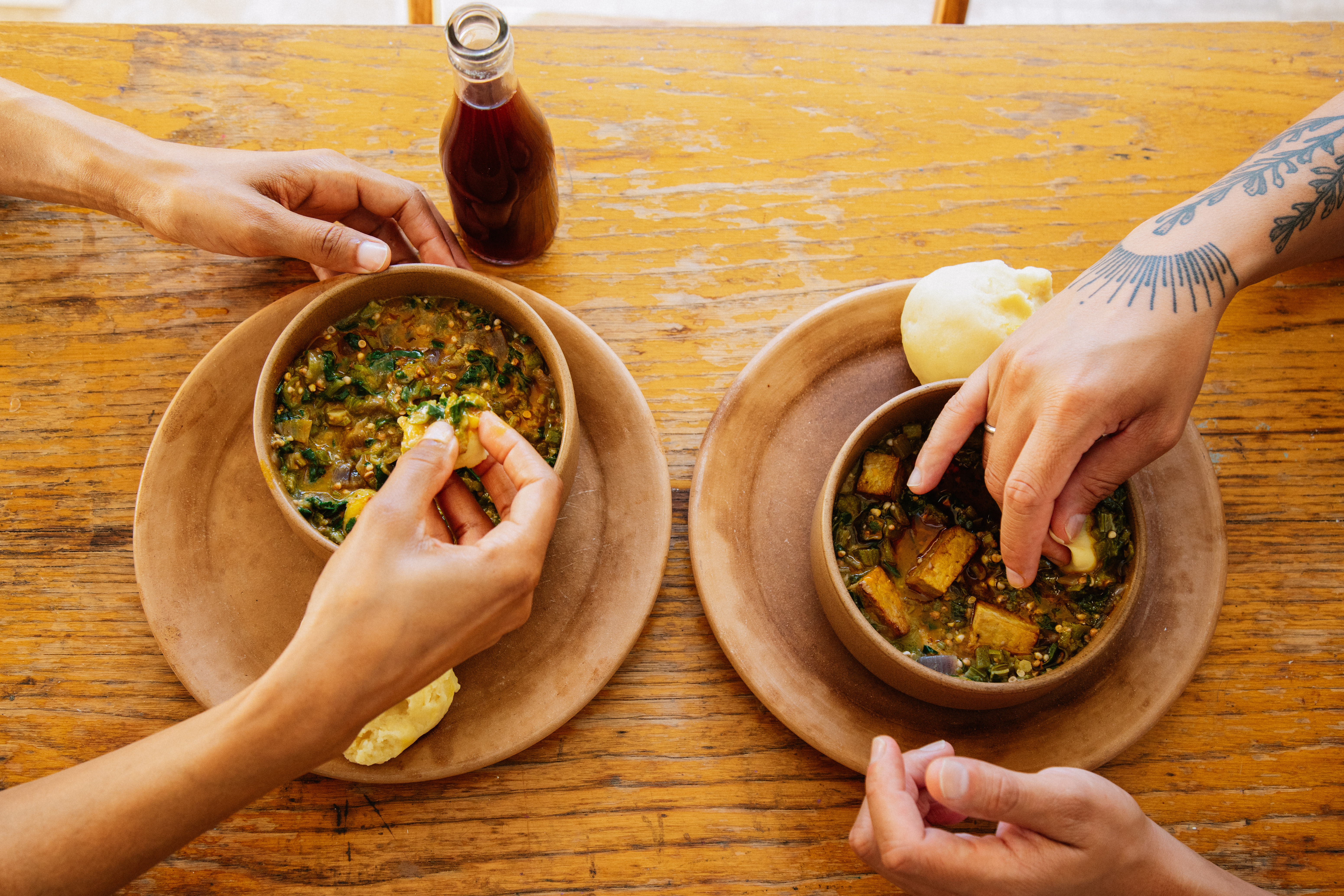
Yoshioka’s original instinct was to look beyond the familiar vocabulary of food media and toward the people and communities behind it. Provecho’s mission, he says, has always been to “highlight the people behind the food, the communities behind the food.” The publication is particularly attentive to the ways mainstream food culture can appreciate the products of a culture without extending the same curiosity or respect toward the people who created them.
“I think I try not to center, like, a white food media landscape lens,” he says. Instead, he wants to acknowledge what that landscape has historically left out: the cultures, communities and people whose food is often enthusiastically consumed without much attention paid to their histories or circumstances.
The result is a magazine where food becomes a kind of connective tissue. An issue might move from a personal memory of a dish into questions of migration and identity, or from an ingredient into a larger conversation about labor, community or belonging. One essay Yoshioka cites, about Meals Ready to Eat (commonly referred to as MREs) distributed during Hurricane Katrina, helped him see just how expansive that territory could be. If food is present during a natural disaster, a humanitarian crisis or a mass displacement, then it can become a way into those subjects, too.
“I think in retrospect, it’s like, oh, duh,” he says. “And in those early days I was like, so almost timid about the possibility of it, and now I’m like so thoroughly convinced that it’s a good frame, I guess, to use that. Its power is in its universality, I guess.”
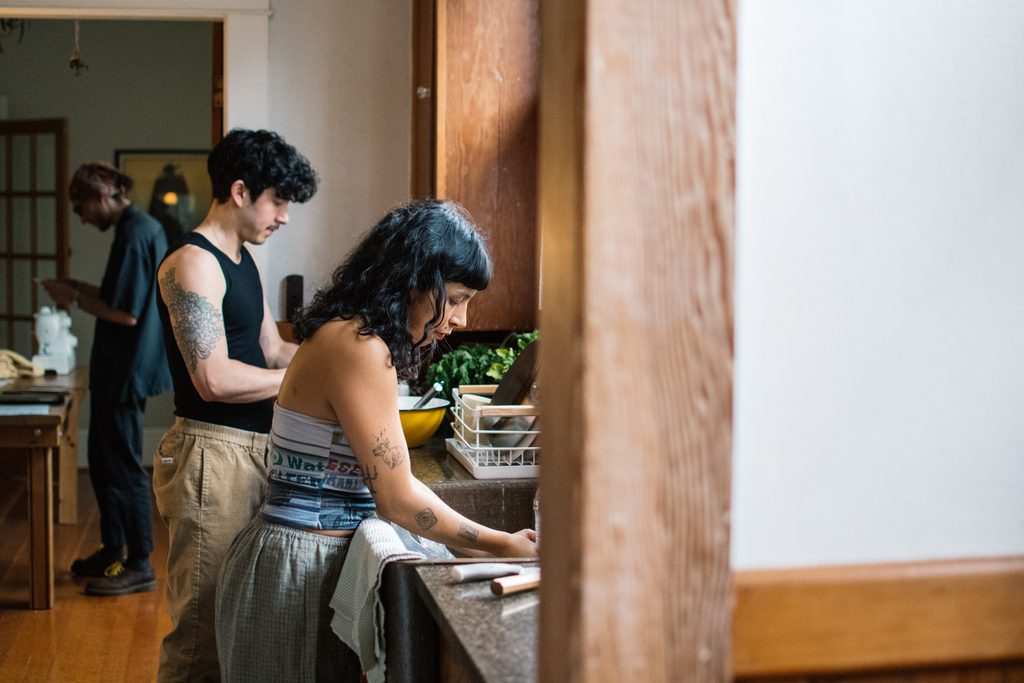
That universality is important because Yoshioka isn’t interested in making the magazine accessible by sanding away specificity. In fact, he believes the opposite can be true. His editorial instinct is to go deeper into the particular rather than searching for a broadly relatable subject.
“You winnow the field really intensively,” he says. “You get very, very particular about the details and the uniqueness of the experience. And then what happens is it’s gonna feel like it’s becoming less relatable, but then the more and more specific you get, the more you drill down, then the field opens up again, and it becomes this highly universal kind of connection point again.”
It is a useful philosophy for a publication devoted to stories that might not otherwise find a home. Provecho has become known for publishing writers at the beginning of their publishing careers, giving people space to tell stories from within their own communities rather than asking them to translate those experiences into a more familiar institutional voice. Recent coverage of the magazine has similarly highlighted Yoshioka’s approach of asking contributors to write for an audience of one: themselves. More than simply an exercise in finding new voices, it has matured into an editorial philosophy about who gets to decide what a story means.
When Yoshioka evaluates submissions, he says he is less interested in whether the subject itself feels urgent or original, because, in his view, almost every story carries some amount of urgency, than he is in the person telling it. “Do they have an ability to convey what they’re trying to convey in a way that feels insightful and full of self-knowledge? Do they have keen observation skills? Are they willing and able to be vulnerable? Is there something that captures their experience in a unique way, even if the thing that they’re experiencing is not necessarily unique to them?”
His job then becomes less about imposing a voice than creating the conditions for someone else’s voice to become clearer. He describes that as creating “a container that welcomes and supports the vulnerability necessary to take the work to the place where it needs to go.”
It’s an unusually intimate way to think about editing. Yoshioka relishes the actual work of shaping a piece, sometimes through intensive revision. But he is less interested in editorial perfection for its own sake than in whether a piece succeeds emotionally and intellectually. Grammar matters. Structure matters. His assistant editor, Emily Chen, helps make sure of that. But the comma is not the point.

“The author experience” is where Yoshioka believes he can bring something particularly valuable to the process. That requires a certain amount of trust: between editor and writer, between writer and subject, and ultimately between publication and reader.
That trust also informs Provecho’s editorial voice. Rather than developing a tightly controlled institutional sound, Yoshioka wants the magazine’s voice to emerge from the distinct voices of its contributors. When he begins working with a writer, he tells them, “I want you to write to an audience of one, and that one is yourself or that one is your community.”
The instruction is deceptively simple. It asks writers not to anticipate the reader’s assumptions or make their experiences legible for an imagined mainstream audience. It also creates room for contradiction, subjectivity and the particularities that can disappear when a story is written primarily to explain itself.
“We don’t have an institutional voice,” Yoshioka says. “We have a style guide, but we don’t have a lot of constraints around how I want things to sound. Rather, I want a multiplicity of very distinct voices to be what constitutes our editorial voice.”
There is another quality he hopes readers recognize: tenderness.
“There is a lot of that,” he says. “In every issue, we get so many stories that make me cry.” He describes the magazine’s writing as carrying warmth and sometimes melancholy, qualities that emerge from an editorial process built around careful attention and trust. “The container that we’ve built is, I think, constitutive of our brand.”
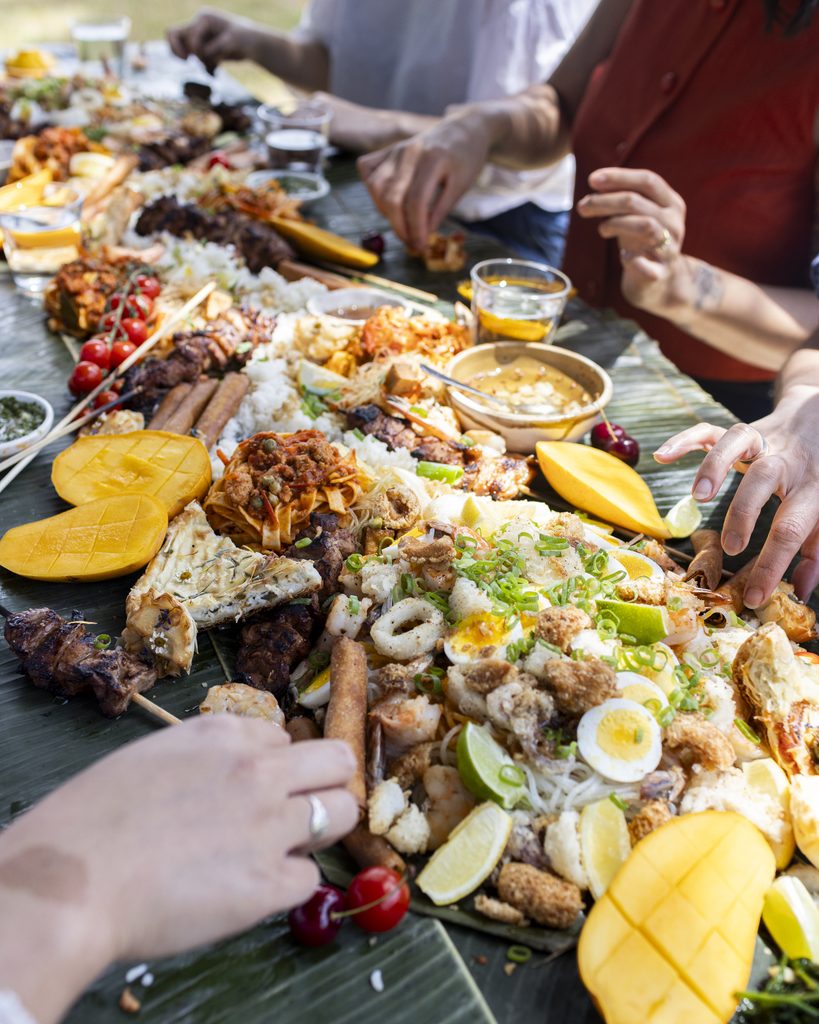
That idea of a container is particularly revealing. A magazine is, after all, a physical frame. It decides what occupies the page, how much space it receives, what sits beside it and what the reader encounters next. But Yoshioka’s approach is less concerned with constructing a singular worldview than with creating enough space for many worldviews to coexist, which lends Provecho a distinct modernity that many publications strive for but don’t quite reach.
That may also explain why Provecho has resisted some of the familiar gravitational pull of food media. Yoshioka is not particularly interested in chasing the same chefs, cities, or trends that dominate the broader conversation. Being based in Portland rather than New York or Los Angeles helps. The magazine simply doesn’t have the same access to celebrity culture, and Yoshioka sees that as an advantage.
“What we lack in maybe celebrity appeal, we make up for in the people that are here,” he says. “Very interesting stories, and who are integrated into their communities in a really deep way. They haven’t become abstracted from their communities.”
That last distinction is crucial. The more a person becomes a cultural product, the easier it can be to lose sight of the community that made them. Provecho’s interest is often in the opposite direction: toward the intimate, the local, the specific and the still-connected.
The magazine’s first four years have also expanded Yoshioka’s sense of what food can hold. What began with food and identity has opened into conversations about migration, natural disasters, race, capitalism, memory and community. Increasingly, he wants to push further into subjects that are uncomfortable precisely because they complicate the celebratory narrative that surrounds food. “Food sovereignty and food security are things that feel so absent, certainly, in mainstream food media,” he says.
Here, the limits of conventional food publishing become especially visible. It is easy to celebrate abundance. It is harder to talk about who has access to it.
Yoshioka is interested in the latter: Indigenous food sovereignty, seed rematriation, water access, degraded land and waterways, and the grief attached to the loss of resources and cultural practices. These are not particularly Instagram-friendly subjects, but they are inseparable from the larger story of food.
He is careful, though, not to suggest that the answer is to stop celebrating food. The joy matters too. The pleasure of eating, cooking, sharing and remembering is part of why food is such a powerful lens in the first place. The point is not to replace abundance with struggle, but to understand that the two exist side by side.
“And I think to only talk about that to the exclusion of topics around food that are difficult and traumatic, and things in which we are complicit in perpetuating, feels like a big blind spot for most publications,” he says. “And we could always be doing more.”
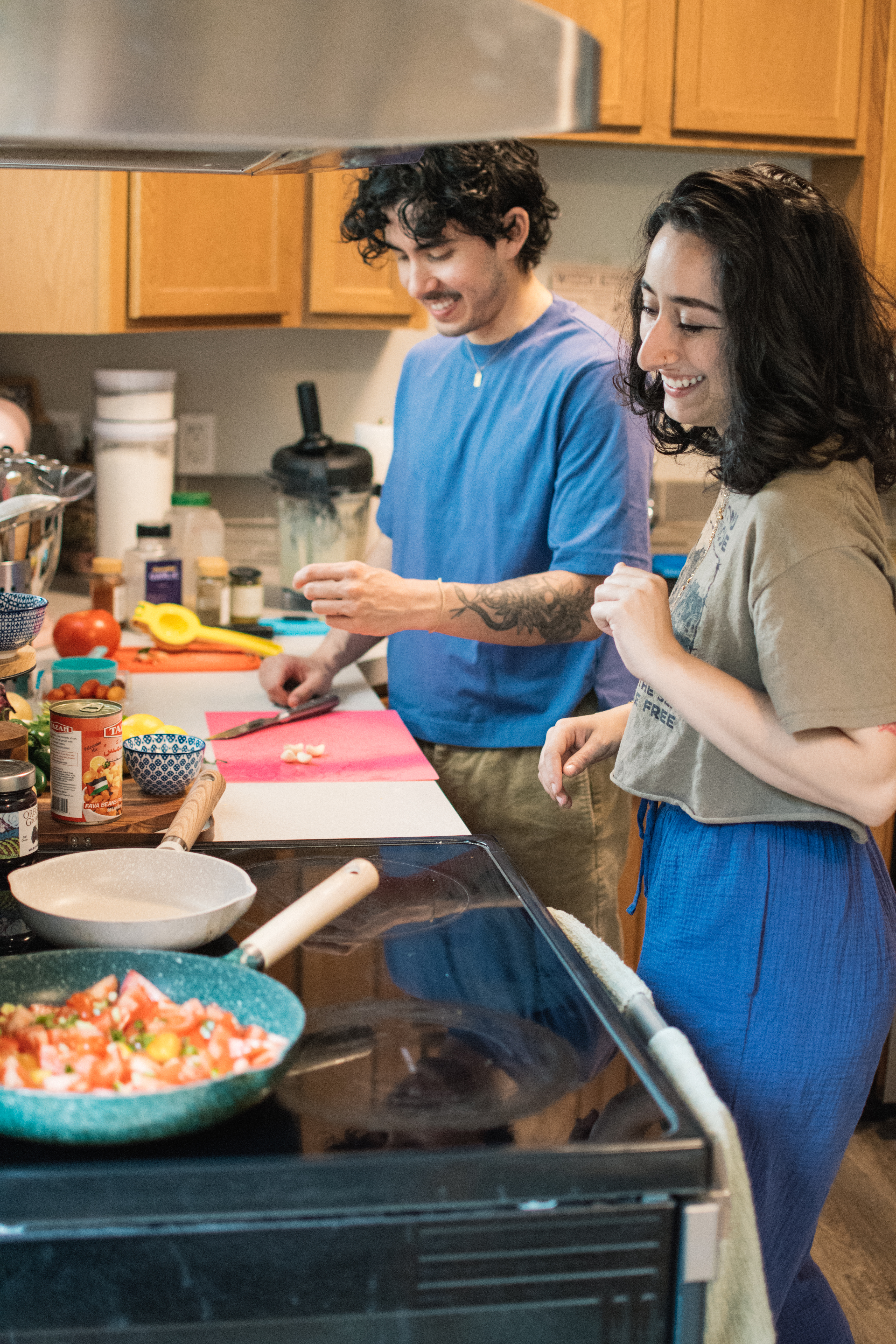
A larger philosophy is embedded in that statement: celebration becomes richer when it is accompanied by context. That pleasure doesn’t become less meaningful when we understand the systems that make it possible. If anything, understanding what is at stake can make gathering around a table feel more significant.
For Yoshioka, that gathering is more than a metaphor. He thinks about food as a reason for people to come together, but also as a means to make something happen once they arrive. “There is, hopefully, in a good gathering, a purpose for convening people in one place that isn’t just for the sake of being in the same place at the same time.”
The same could be said of a magazine. A reader opens it alone, but the experience can still become communal. Someone else’s memory triggers your own. A story about a dish you’ve never tasted reminds you of something your grandmother made. A subject you know nothing about suddenly becomes legible through the very ordinary experience of wanting to understand what someone else loves.
This, perhaps, is what editing Provecho has taught Yoshioka most clearly: that the impulse to tell stories is nearly universal, even if not everyone thinks of themselves as a storyteller.
“We need to feel understood,” he says. “We want to share what we think are the best parts of ourselves. Want to remember and embody who came before us that influenced us. We just have a strong storytelling impulse.” Food simply gives that impulse somewhere to begin.
main image photo credit: Nicholas Peter Wilson