
Ease Isn’t the Point Anymore
At Expo Chicago last week, in conversations with artists moving between booths, installations, studio visits, and carefully considered thoughts about their own work, we noticed that one theme kept resurfacing. Not in grand declarations, but in collected passing comments about process. About slowing down. About choosing to make things a little harder than they need to be, for both themselves and the people consuming their work.
For years, creative work has been shaped by the promise of ease: faster workflows, cleaner interfaces, smarter tools. The goal has been to remove friction, to shorten the distance between idea and execution. The assumption being that less resistance leads to better work.
But as we listened more closely, we realized something else was circling.
Across disciplines, artists are reintroducing friction into their process, not as a limitation, but as a method. Working within tighter, self-imposed constraints. Returning to materials and techniques that require time, repetition, and patience. Even within digital practices, there is a move toward slower, more deliberate ways of making that allow for pause, uncertainty, and revision.
This is not about nostalgia for analog life. It is about weight. When everything becomes frictionless, the work can begin to feel too immediate, too resolved before it has had time to evolve. Friction is what interrupts that speed. It creates space for reconsideration. It forces decisions that might not surface otherwise.
In this sense, friction becomes a form of structure. The moment when something does not quite work and demands a change in direction. The limitation that narrows the field just enough to clarify an idea. A pause that introduces doubt, and with it, the possibility of something more distinct.
Our culture chases speed and output, meaning this kind of approach can feel counterintuitive. It slows things down and resists optimization. But it also returns a sense of authorship to the process. It asks more of the person making the work, and allows the work to hold more in return.
What emerged from these conversations last weekend was not a rejection of technology or progress, but a more intentional relationship to both. An understanding that ease is not always the goal, and that a certain amount of resistance may be essential. Because it is often in that resistance, where things take longer, where they do not immediately resolve, that something sharper begins to take shape.
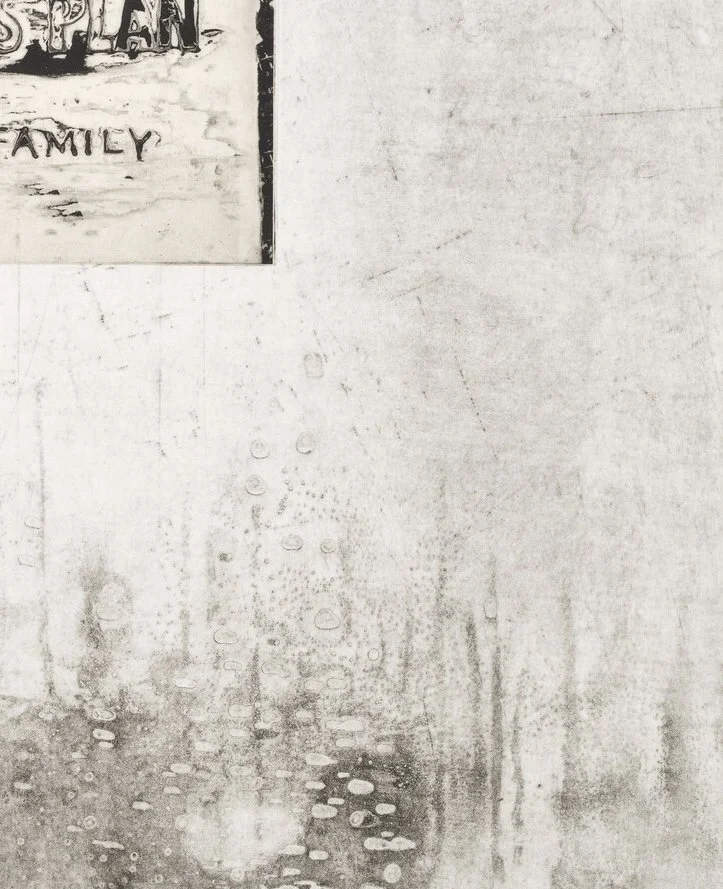
image: Mark Bradford, Untitled, 2012, (detail) Etching and photogravure with chine-collé