Gallery: Justin Paik Reese, Ceramicist
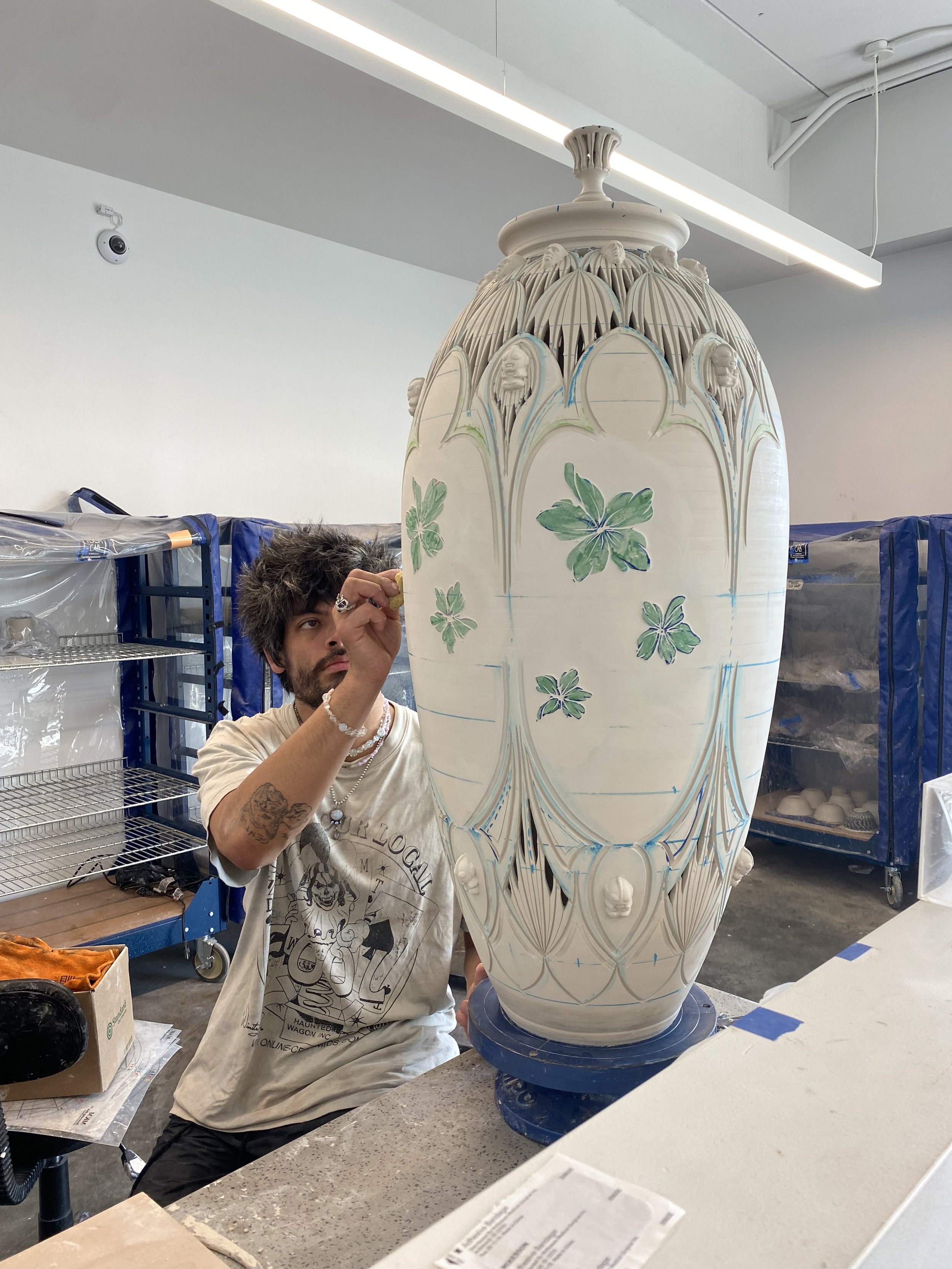
Blending Korean heritage, Midwestern decay, and the color language of 90s pop culture, the Ohio-based artist creates vessels that act as time capsules for the worlds that shaped him.
Some artists work with clay, while others engage it in conversation. Justin Paik Reese falls squarely into the latter, an interdisciplinary ceramicist whose vessels feel less like objects and more like living memory systems. Based in Youngstown, Ohio, Reese has developed a language of form that moves between Korean ginger jars, midwestern architectural decay, retro gaming culture, and the unspoken and familiar interiority of growing up between cultures. His work has circulated widely in recent years, catching the attention of collectors and contemporary craft spaces drawn to the ways he merges sculpture, nostalgia, humor, and history into something unmistakably his own.
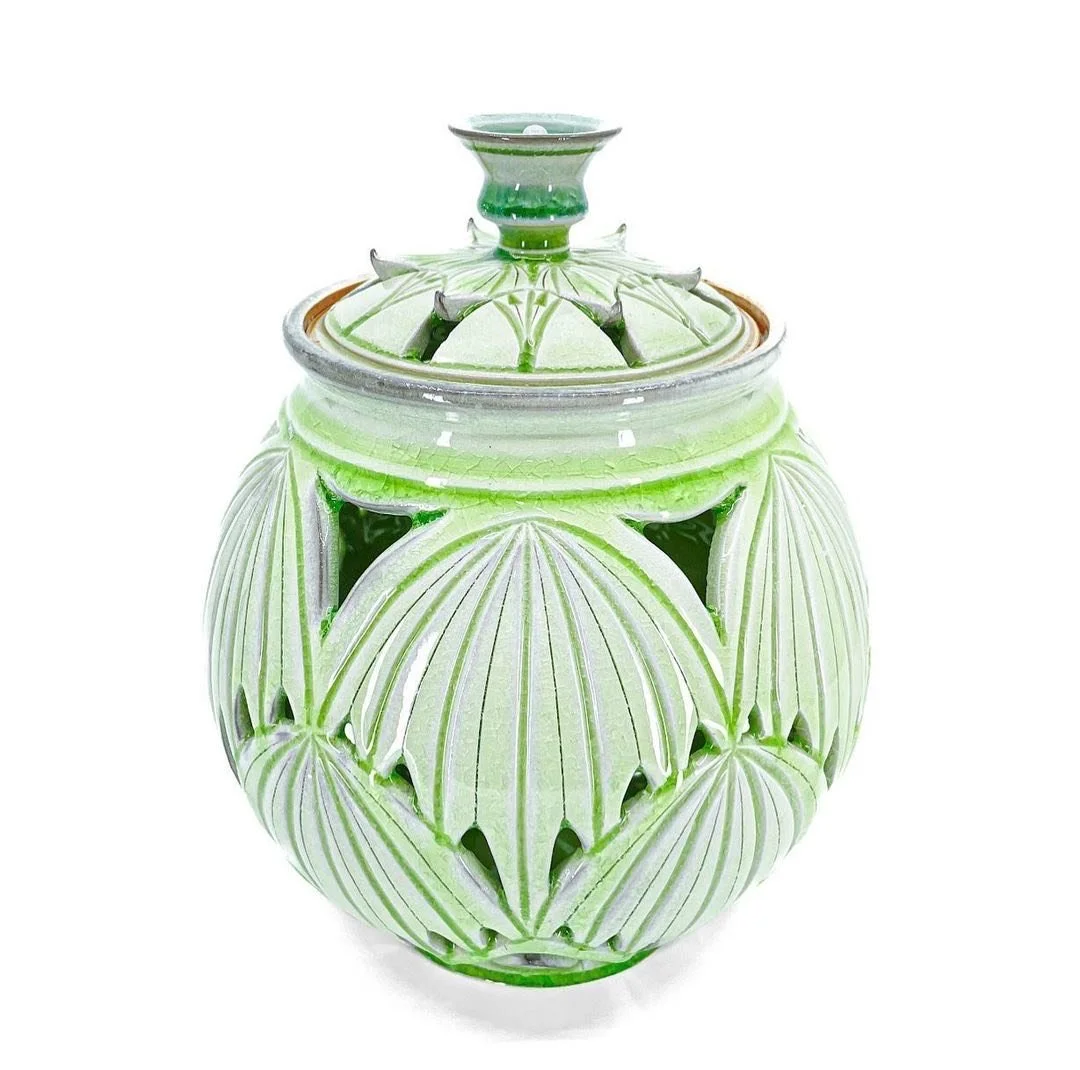
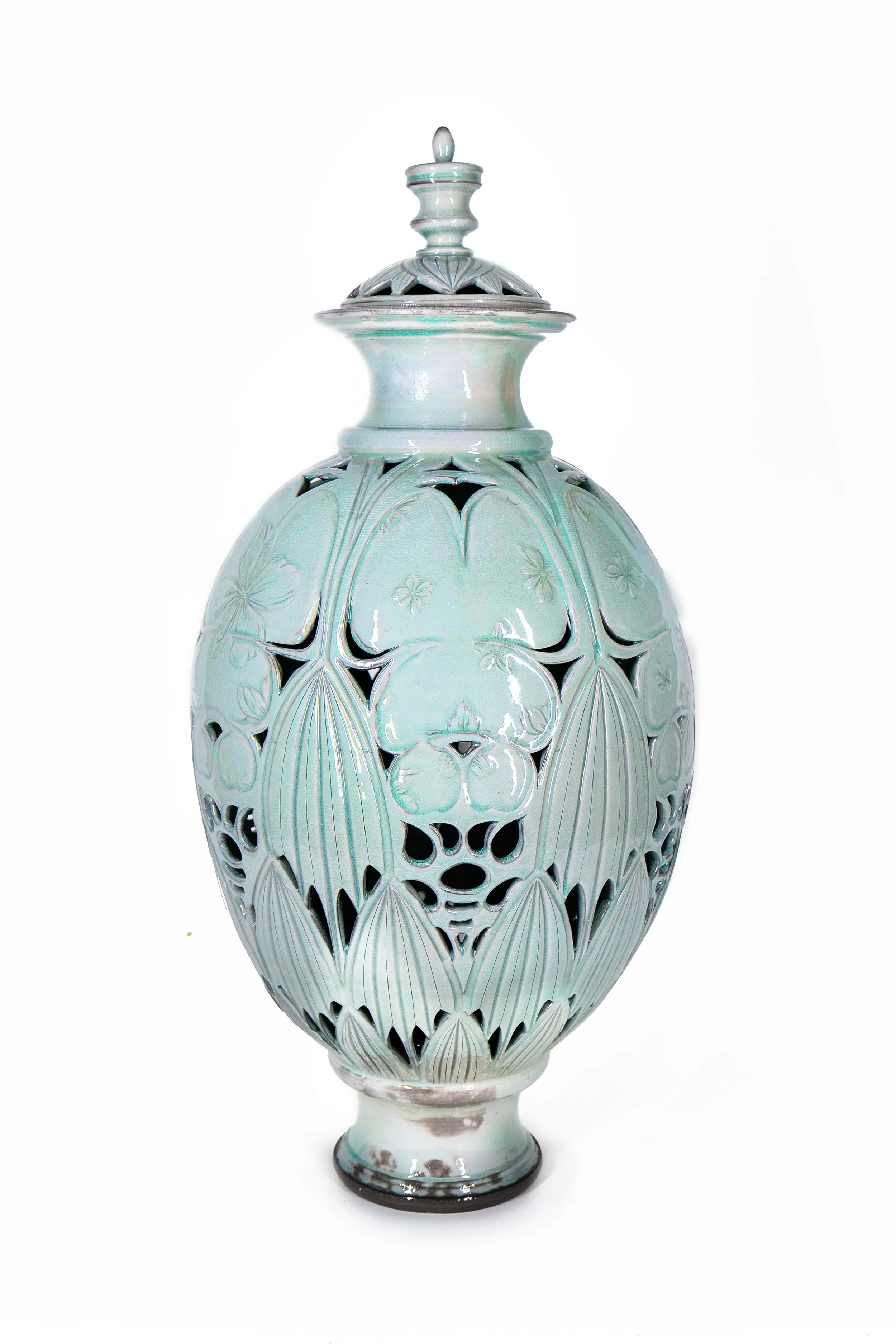
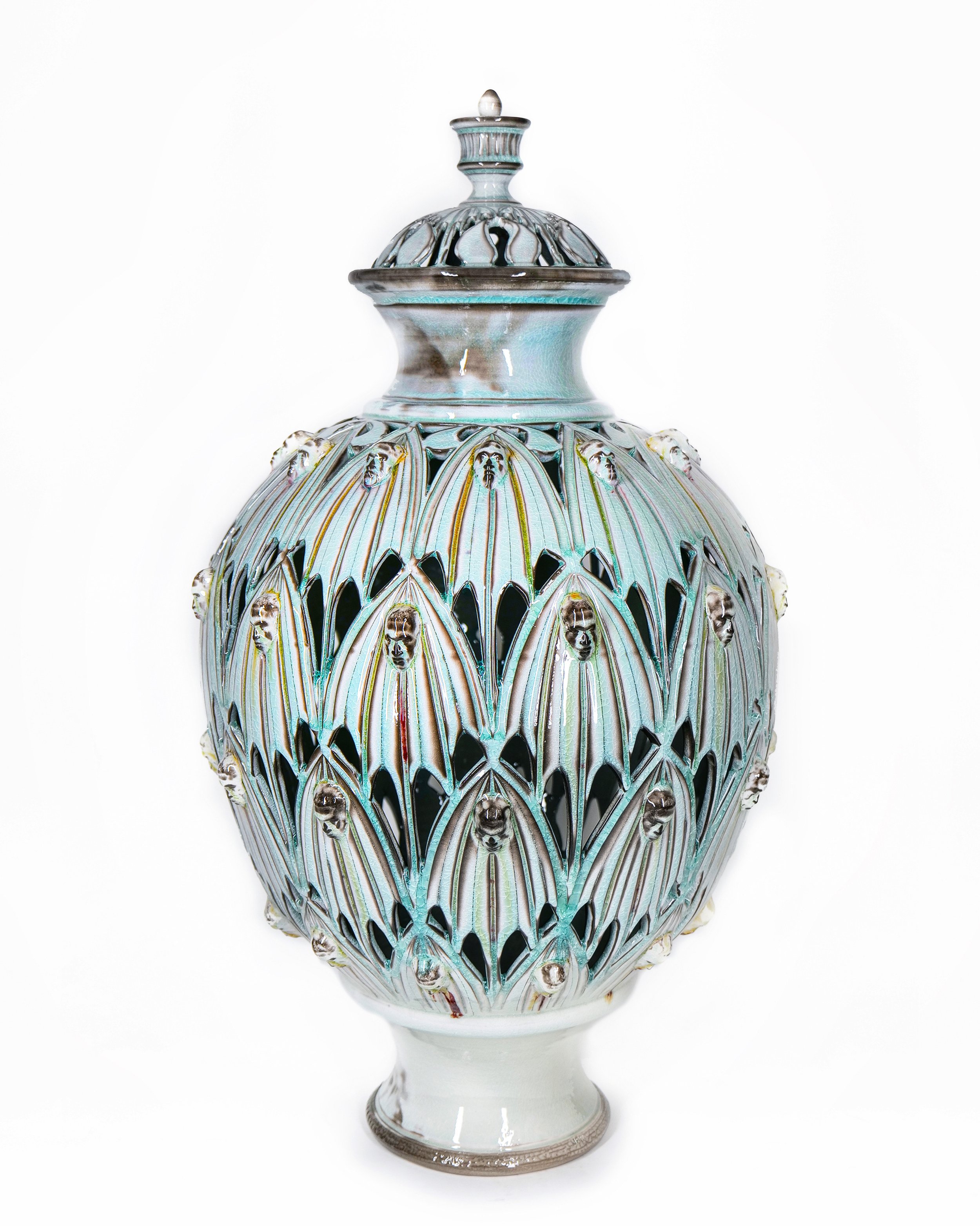
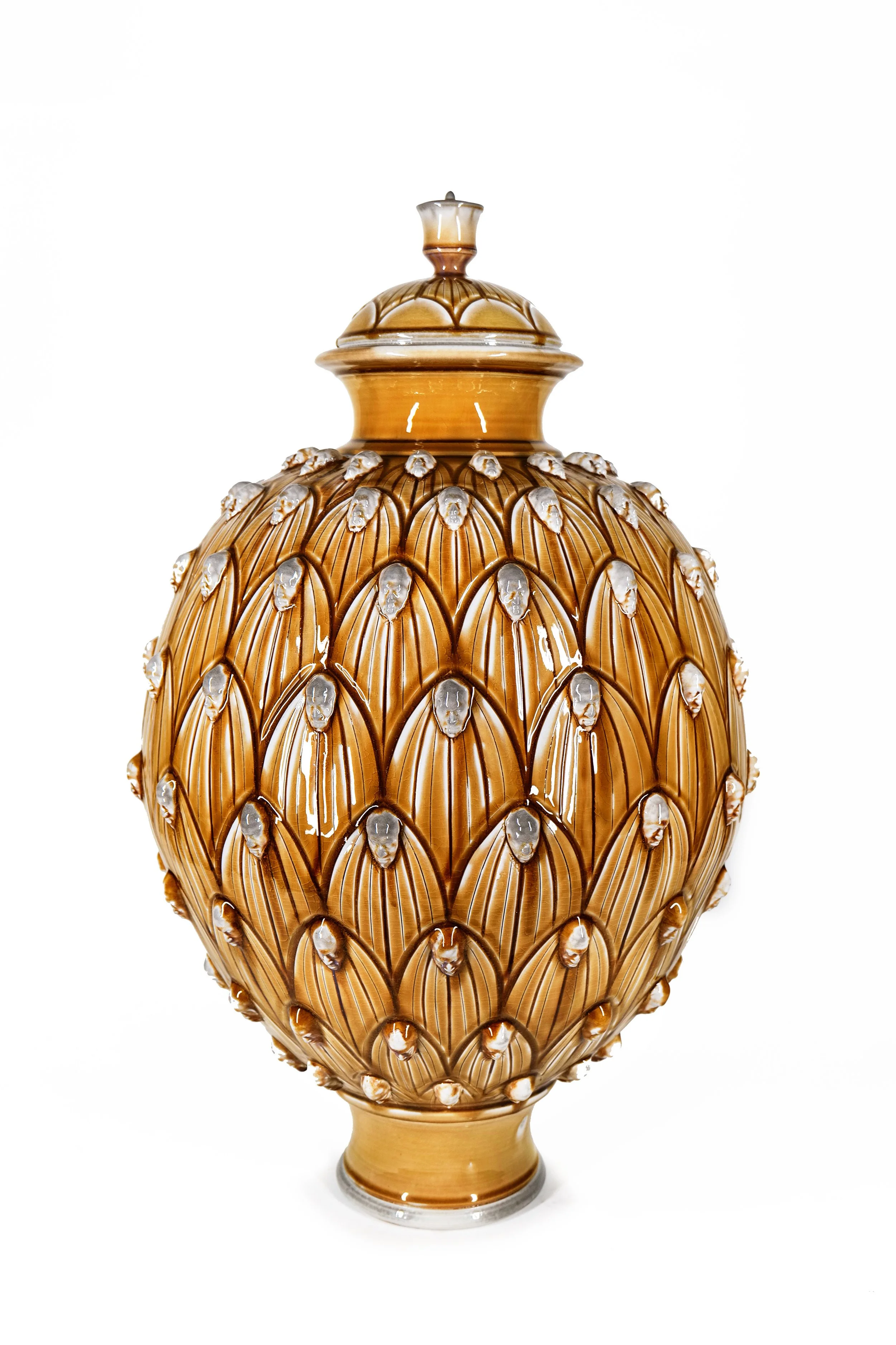
Reese’s work is known for their architectural silhouettes– vaulted, perforated, sometimes improbable, often glazed in patterns that carry the spirit of 1990s anime, basketball graphics, or Super Nintendo palettes. They rest at the intersection of the sacred and the playful, the ancestral and the pop-cultural. And his story is stitched into every part of them: a childhood split between Youngstown, Ohio, and visits to family in Korea; a mixed-heritage identity that never neatly fit into one place or the other; and a practice shaped as much by memory as by material.
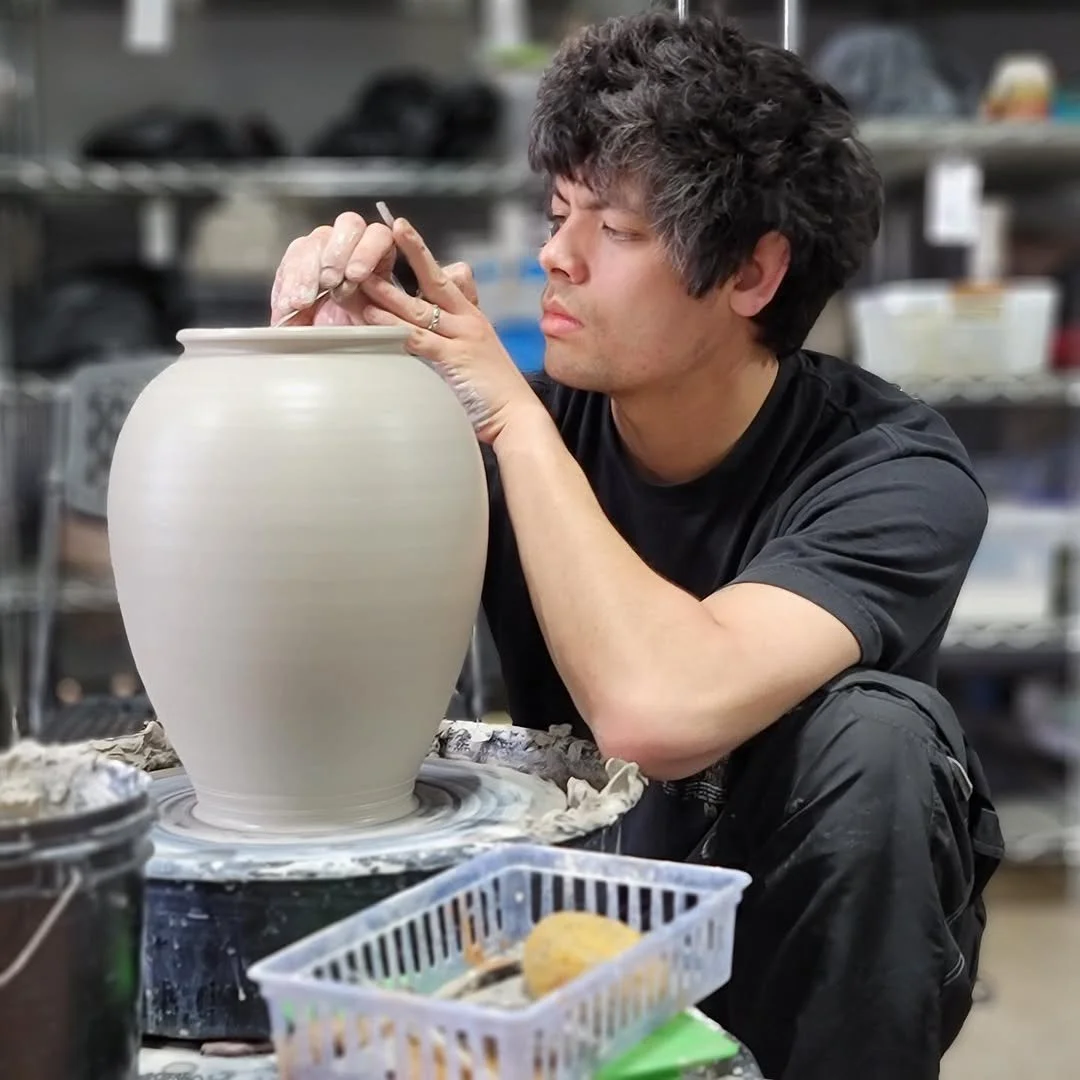
“I felt a sensation of belonging and familiarity as I struggled to center the clay. It felt ancestral.”
Before he landed with ceramics, Reese trained as a painter at the Columbus College of Art and Design. But the moment that changed everything was almost accidental. He took a required science course, Glaze Calculations, and one of the assignments asked students to formulate a clay body from scratch. Sitting at the wheel for the first time, he remembers something ancestral taking over. “I felt a sensation of belonging and familiarity as I struggled to center and shape the clay,” he says. “I understood this moment as something ancestral, and I never looked back.”
That sense of inheritance threads through the jars that have since become his signature. Their full-bodied forms recall those of his grandparents’ vessels in Korea; the carved geometries echo the Gothic Revival facades and industrial ruins of Youngstown. “I like to call it Gothic blight,” he says. “This balance that is portrayed in my work is the aftermath of surviving layers of obsessive chaos and curious spontaneity.”
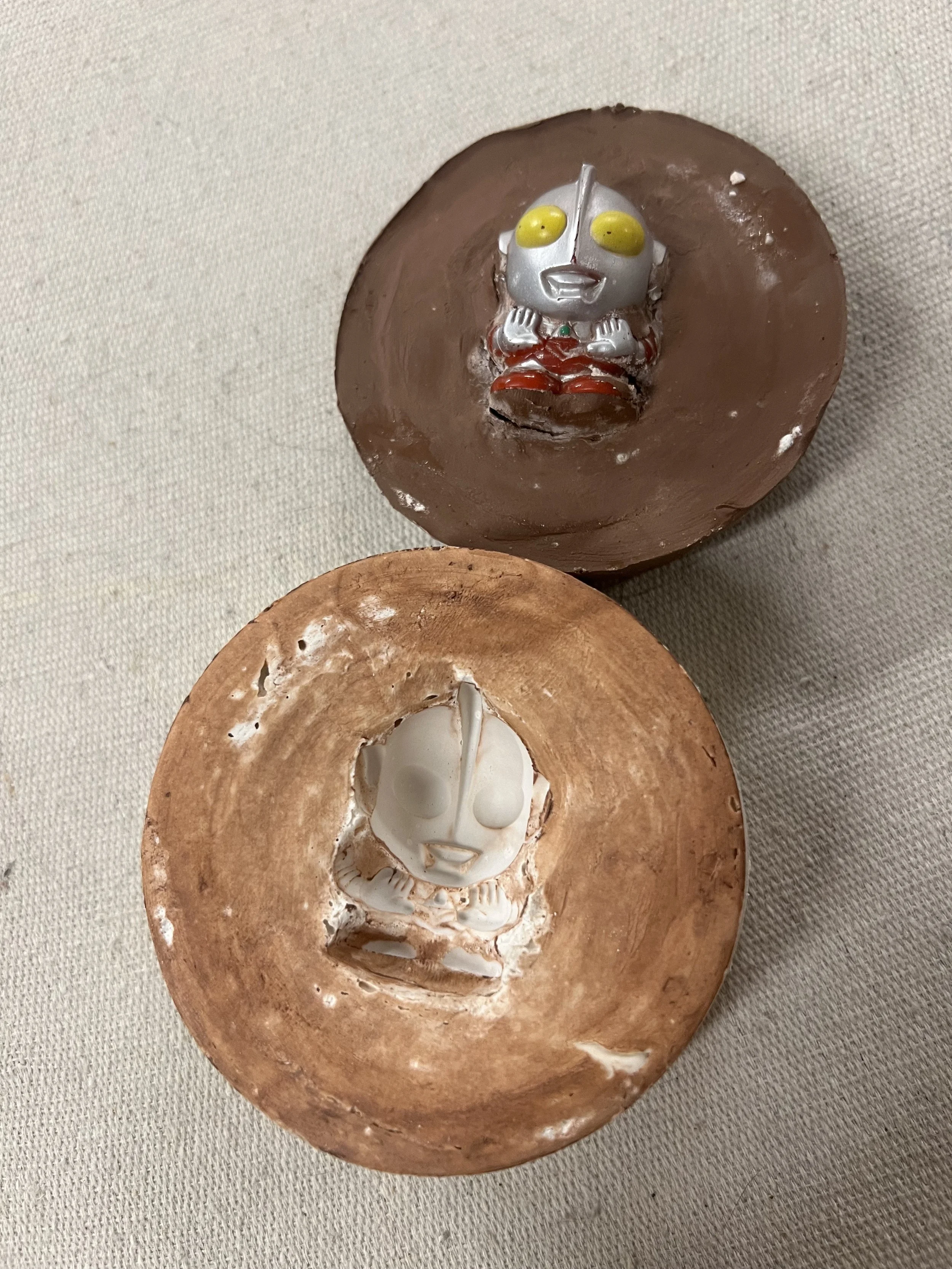
Pop culture sits right beside these architectural and familial forces, not as ornament, but as emotional infrastructure. Reese talks about nostalgia the way some people talk about spirituality. His Super Nintendo games, his memories of spending arcade money earned from back rubs for his cousins, his love of DBZ and 90s basketball– all of it is a living archive for him. “Pop culture is the glue that keeps all of these memories intact,” he says. “It keeps us ALL united… especially in a world where divisiveness is always right around the corner.”
“Navigating this world with all of this tension… I’m just grateful I had the courage and willpower to channel it into a life of art.”
His influences extend beyond mass culture as well. He cites the structural drama of Youngstown’s homes, and the work of Cochiti Pueblo artist Virgil Ortiz, whose sci-fi reimaginings of Indigenous history have helped Reese see the power of mining one’s own lineage for narrative and conceptual force. It’s a connection that resonates: both artists treat memory as something futuristic, not fixed.
Reese’s work lives in the in-between, a place he knows intimately as a Korean American with Irish and Welsh heritage. “Here, I look Asian. There, I look white,” he says. “Navigating this world with all of this tension… I’m just grateful I had the courage and willpower to channel it into a life of art.” That liminality, that sensation of shifting between worlds, hardens into a formal logic in his pieces. Many sit on the edge of structural impossibility, like relics that have weathered time, culture, and displacement. “I want people to wonder how it’s upright,” he says. “I want it to look like a relic that has endured… giving a feeling of perseverance, wonder, humor, and awe.”
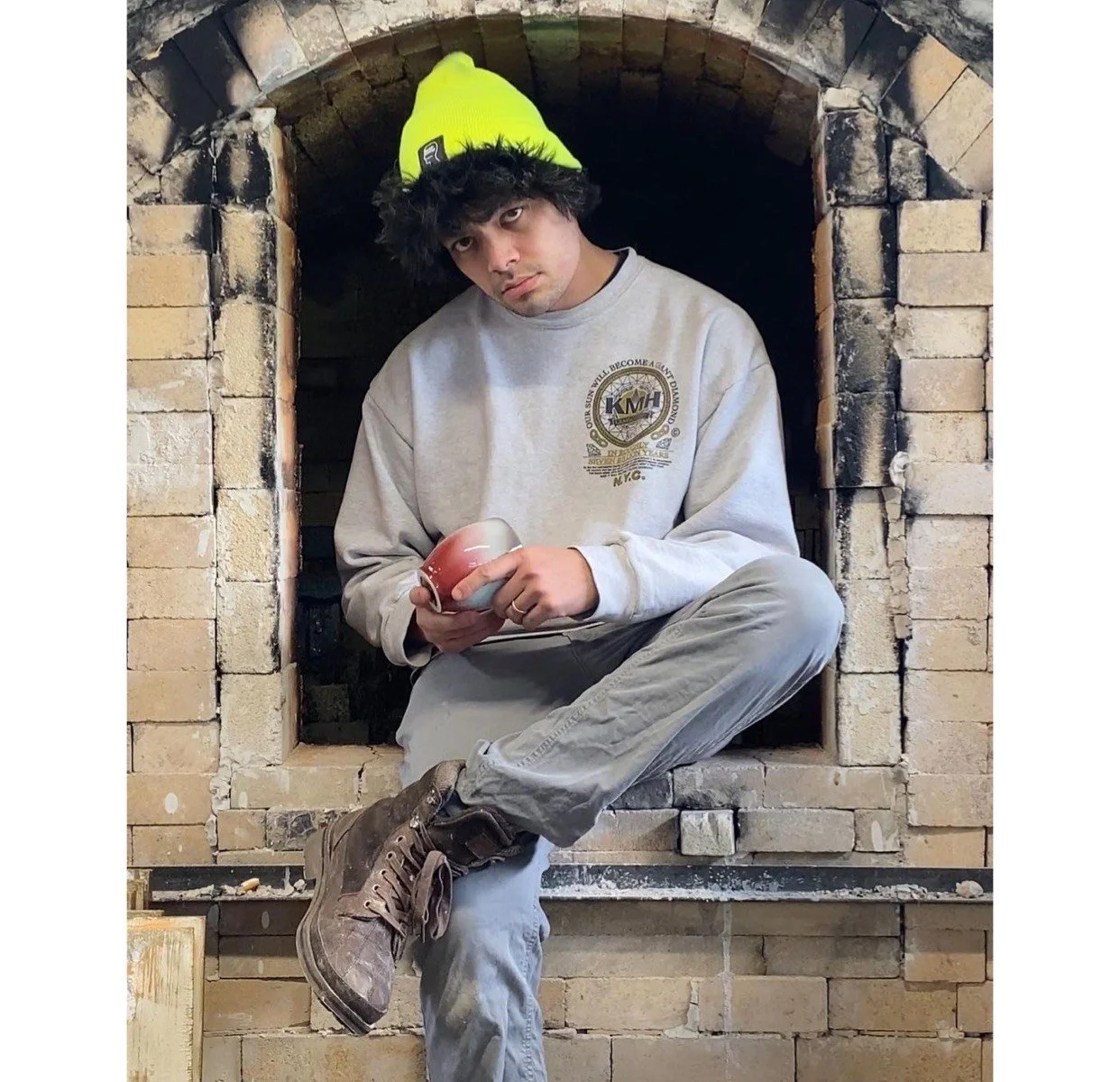
Ask him what the jars are, and he won’t give you a single answer. Bodies? Buildings? Guardians? “Something in between,” he says. “Maybe along the lines of being guardians as well as time capsules… jars that contain memories unknown to anyone but myself.” That private interiority– what the vessel knows that we don’t– is part of the quiet tension that makes his work so magnetic.
And though his practice is deeply personal, it’s also communal. Reese mentions his brother, Salem, as his creative counterpart, someone who has always pushed his imagination into unexpected places. A future collaboration feels almost inevitable. “It would be the ultimate ‘in-between,’” he says. “He’s also my favorite artist.”
Reese’s ceramics occupy a rare space: tender without sentimentality, humorous without irony, architectural without rigidity. They feel like artifacts from a world that is part Youngstown, part Korea, part childhood arcade, part imagined future. They are time capsules. They are guardians. They are, as Reese suggests, storytellers, and we are just catching them mid-sentence.
Below, a gallery of Reese’s vast portfolio. Learn more about Justin’s work at jpr-studio.com