
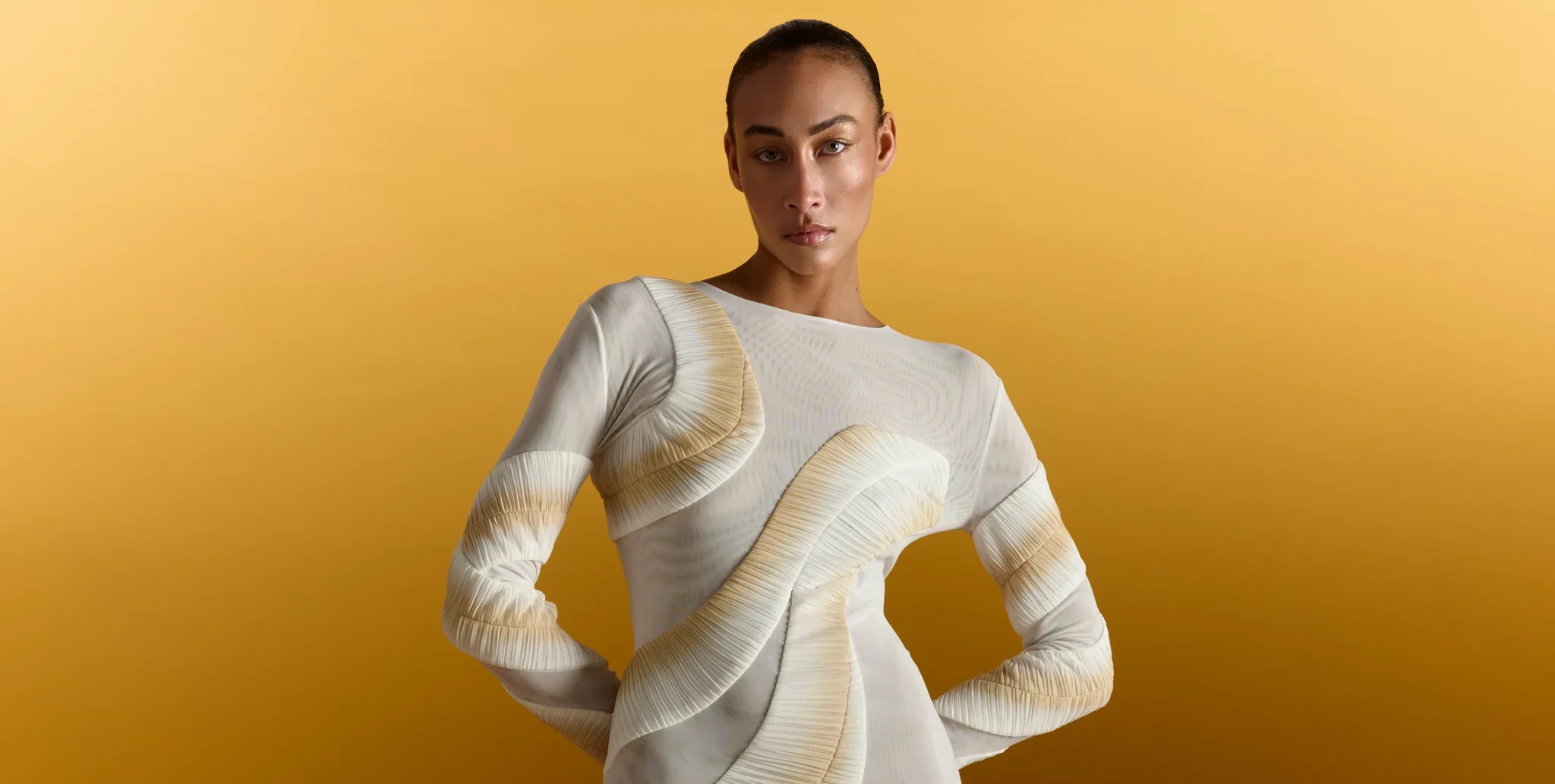
The Shape of Home
The Architecture of Belonging
Fashion Designer Rakan Shams Aldeen’s work distills memory, migration, and architectural rigor into silhouettes that feel both grounded and weightless.
Born in Homs, Syria, Rakan Shams Aldeen’s life has unfolded across borders, from Lebanon and Turkey to the United States, Amsterdam, and now Dubai. That movement has shaped his design language as much as his worldview. For him, the idea of home is less a fixed location than an evolving constellation of details: familiar textures, fragments of architecture, the weight of light through a curtain. Each place he’s lived has left an imprint on his creative sensibility, deepening his sense of proportion, structure, and composition.
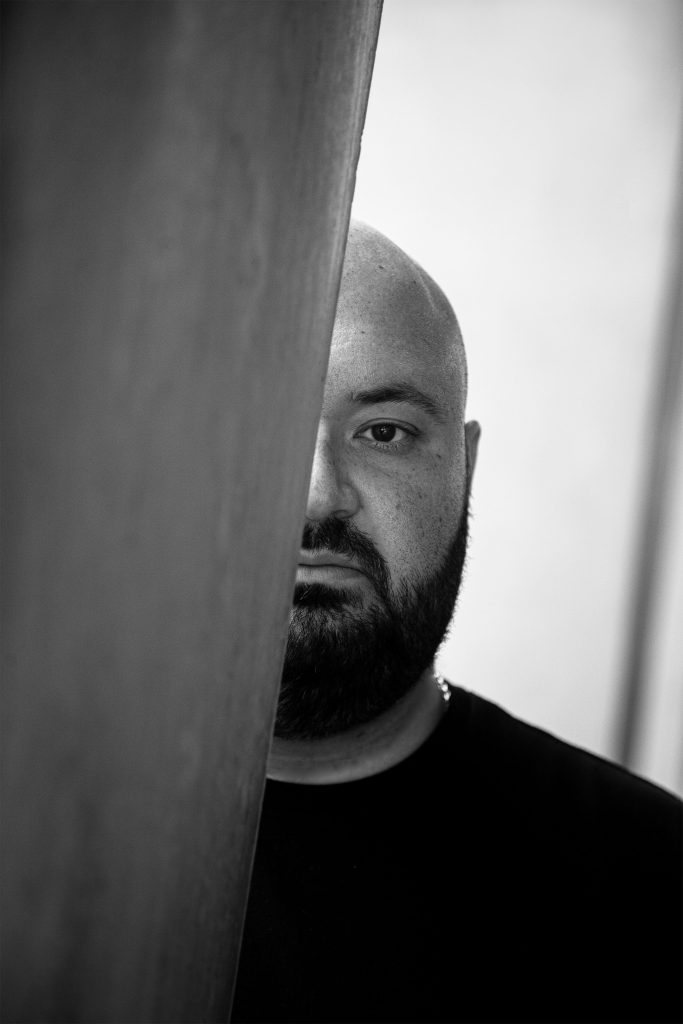
Trained first in architecture, Rakan approaches fashion as an extension of spatial design, with garments that interact with the body much as a building does with its surroundings. The influence of Syria’s ancient architecture still runs quietly through his work: the balance of geometry and emotion, the discipline of structure softened by the rhythm of human movement. His label, RAKAN, feels built rather than merely made, with its precision and restraint revealing an almost architectural serenity.
After his appearance on Project Runway in 2019, Rakan’s perspective on the industry sharpened. He learned to preserve clarity amid the noise, to work with focus under pressure, and to trust a slower kind of evolution. Each new collection builds on recurring ideas that he continues to refine, a vocabulary of forms and folds that reflect both memory and movement.
Fashion now often prizes timeline-ready spectacle, and Rakan’s work stands apart for its quiet conviction. His notion of modern luxury isn’t bound to excess or expense (or clicks and views, thank you very much) but straight to the singular: pieces that carry meaning, intention, and the rigor of craft. His path, from a war-torn homeland to an international studio practice, reveals a designer grounded in architecture, yet propelled by emotion, translating his own migration into wearable structure.
For Rakan, the idea of home has always been something he carries rather than something he returns to. “Home becomes the memories that you carry around with you,” he says. Each time he relocates, most recently to Dubai this year, he recreates the small but grounding details that tether him, assembling a sense of safety through familiar objects and atmospheres. In his work, that internal migration shows up not as nostalgia but as a kind of emotional engineering: garments constructed with the same care someone might use to build a sanctuary.
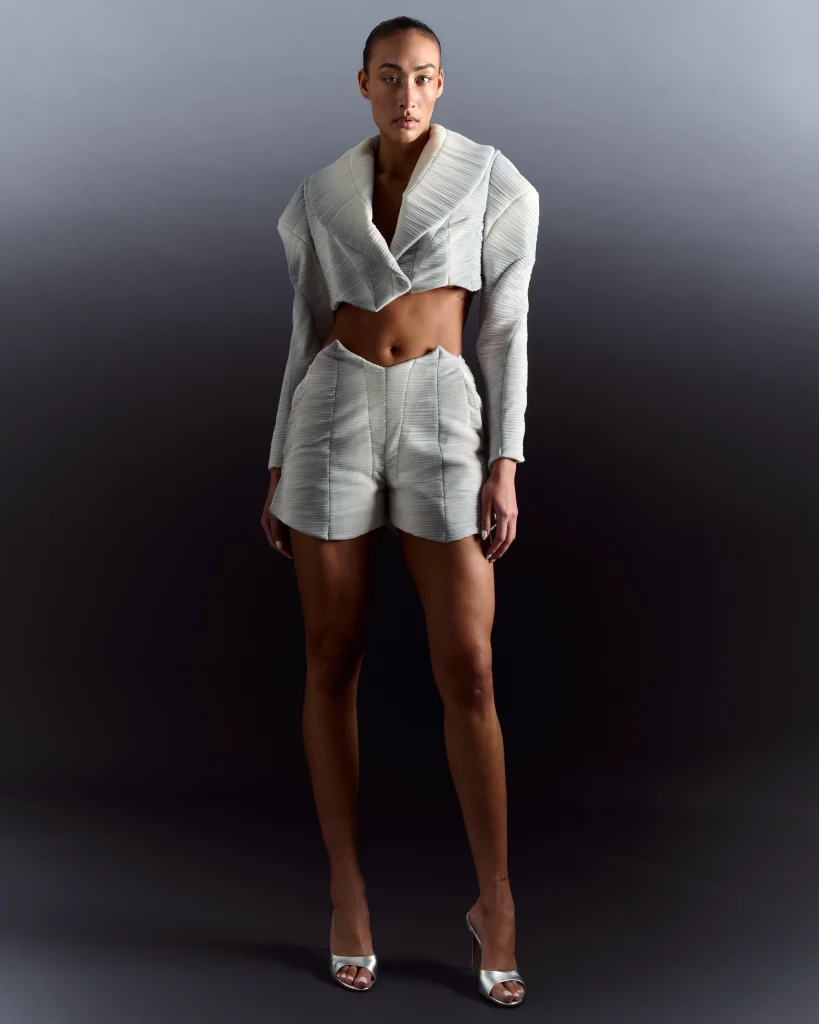

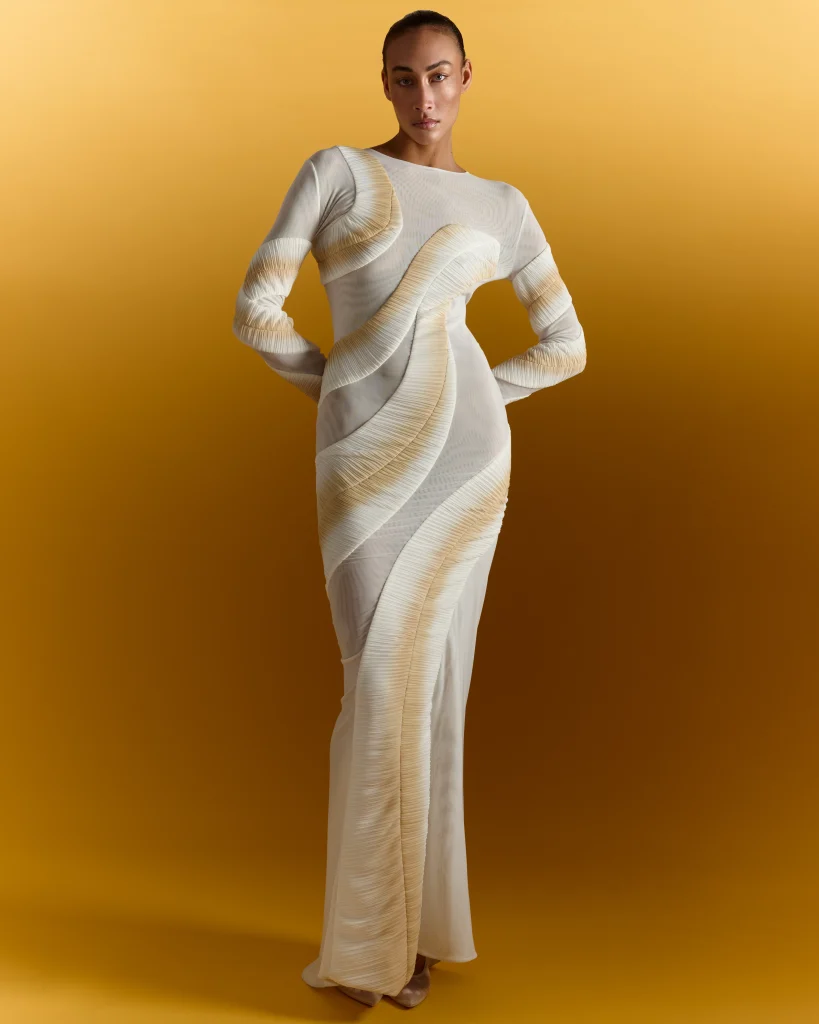


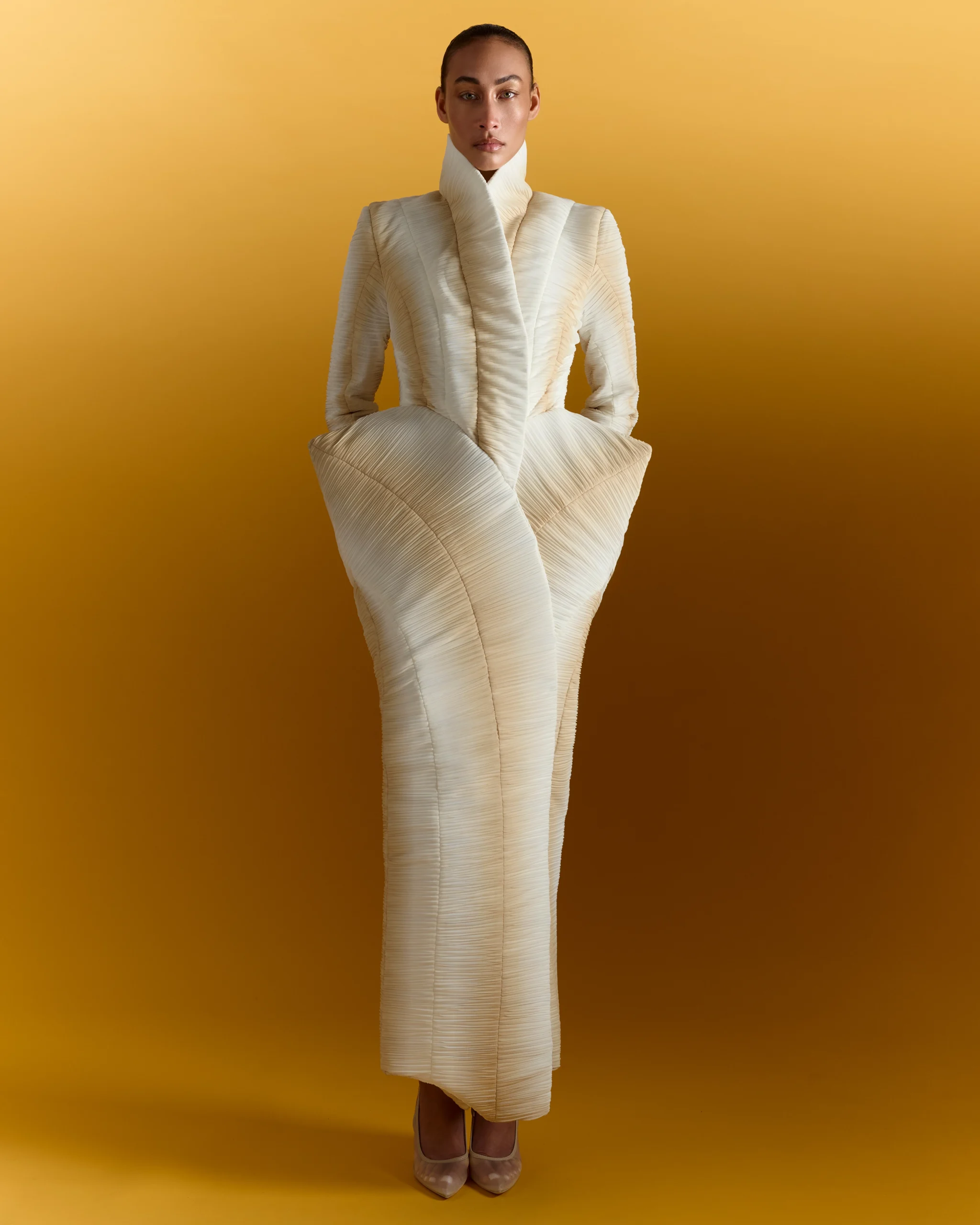

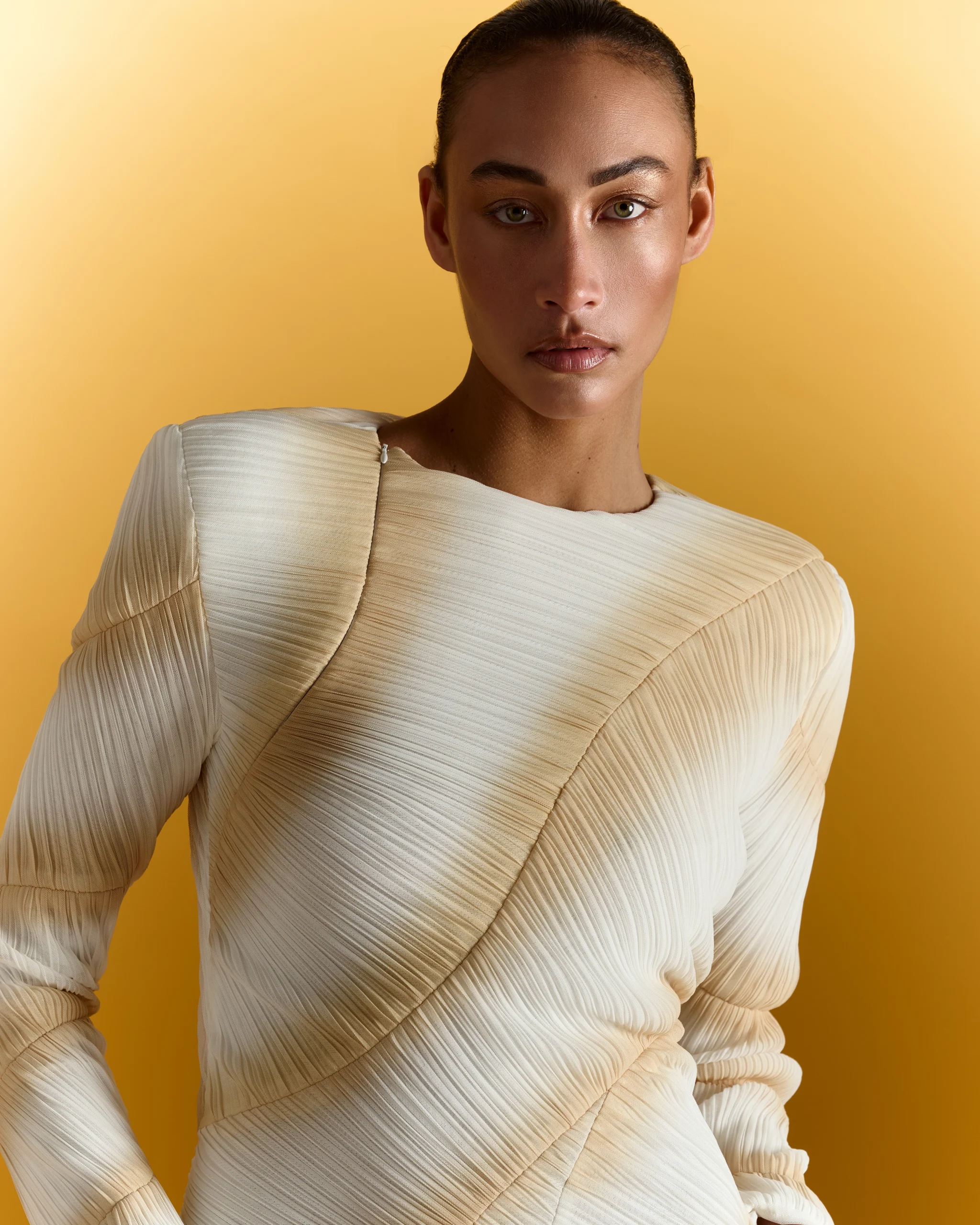
His aesthetic discipline traces back to childhood in Syria, where ancient architecture formed a kind of early education. “I was surrounded by great, very ancient architecture and art,” he says. “It trained my eyes: proportions, compositions, all of that was there before I even understood it.” Later, his formal studies in architecture gave him the vocabulary to articulate what he had already absorbed intuitively. Today, that dual lineage appears in the tension between the precision of his silhouettes and the softness of the hand that builds them. Fabrics are treated almost like structural materials; color is deployed the way architects use light; volume becomes a spatial language.
Rakan talks about architecture not as an influence but as an origin point. “Learning architecture was the base for everything,” he says. His newest collection includes forms inspired by iconic buildings– not literal references but translations, bends, and abstractions that contour around the human body. He builds clothing the way an architect might design a residence: with an understanding that people don’t occupy space passively; they activate it.
His evolution as a designer has been less about reinvention than about excavation. Despite crossing continents, one throughline remains. “Funny enough,” he says, “I find myself channeling the same ideas and inner thoughts season after season, but in a new way.” The concepts repeat, but they mature, the way memories do as you age, growing richer even as the exact details collapse a bit around the edges.
That continuity feels especially poignant in a fashion climate defined by speed and mind-numbing sameness. Rakan is disarmingly honest about the state of the industry: “The system is completely broken,” he says. “Creativity has no place but to bring views. All brands are making the same clothes; you can’t tell who’s who.” He worries about the breakdown of mentorship, the shrinking space for young designers to experiment before they’re forced into commercial templates, and the outsized influence of online commentary that swings entire careers on the whims of “kids who create hype based on limited knowledge.”
His definition of modern luxury stands in deliberate opposition to that churn. “Luxury is about being different and wearing something unique,” he says. “It has to mean something to you. It doesn’t have to be expensive to be luxury.” In a landscape of maximum noise, he insists on clarity: the uniqueness of the idea, the craftsmanship, the emotional charge of a piece that feels lived with rather than consumed.
What Rakan is building, through memory, migration, and meticulousness, is a body of work defined not by geography but by grounding. Architecture gave him the tools; movement gave him the palette; home, in all its shifting forms, gave him the reason. The rest is discipline, intention, and the quiet conviction that a garment can be a place you inhabit, even when the world won’t give you one.
Learn more about Rakan and his collection at rakanshamsaldeen.com