The Invisible Infrastructure of Creativity: Record Stores
When we talk about creativity, we’re usually referring to finished work: a painting, a novel, a new building, an album, or a newly unveiled exhibition. Far less attention is given to the places that play a supporting role in making those things possible.
With our new series, The Invisible Infrastructure of Creativity, we’ll explore the often-overlooked spaces, institutions, and rituals that sustain creative life long before the finished work reaches the world.
Every creative ecosystem relies on an invisible infrastructure: libraries, archives, studios, bookstores, parks, museums, cafés, and countless other spaces where ideas are encountered before they become work. These places rarely receive the same attention as the artists they ultimately support, yet they shape creative lives in profound ways.
Record stores belong on that list. On the surface, they are places that sell music. In reality, they have always offered something far more valuable: a way to discover culture.
There is something subversively radical about walking into a record store without knowing exactly what you’re looking for. No algorithm has assembled the shelves based on your listening history. No playlist has anticipated what your next favorite song might be. Instead, discovery happens through wandering. An album cover catches your eye. A conversation begins with someone browsing the next bin over. The person behind the counter recommends a record you’ve never heard of. You leave with something you never intended to buy. Curiosity built that experience, not a prediction.
Streaming platforms have given us access to nearly every piece of recorded music imaginable. That is clearly an extraordinary achievement. But access and discovery are not the same thing. Algorithms are remarkably good at giving us more of what we already know we like. Record stores have always been better at introducing us to what we didn’t know we were looking for, often with a real-life human singing its praises. For creative people, that distinction matters.
Influence rarely arrives in a straight line. A photographer discovers Japanese ambient music. An architect falls in love with Detroit techno. A painter finds unexpected inspiration in an obscure jazz record. Creative thinking depends on these unexpected head-on collisions between disciplines, ideas, and experiences. Record stores create the conditions for those collisions to happen.
Maybe this is why independent record stores continue to matter, despite the convenience of streaming. People still seek out spaces where discovery feels human. Recommendations carry more weight when they come from infectious, human enthusiasm rather than probability. There is genuine value in trusting another person’s taste (and willingness to share), and even greater value in stumbling across something entirely by accident.
The same could be said for libraries, museums, independent bookstores, and archives. None of them exist simply to house culture in orderly arrangements. They exist to create the possibility of encounter. These places remind us that curiosity often flourishes where efficiency does not.
We naturally celebrate the finished work because we can see it. The places that help produce it often remain in the background. Yet without this invisible infrastructure of creativity, much of the work we admire might never have existed in the first place.
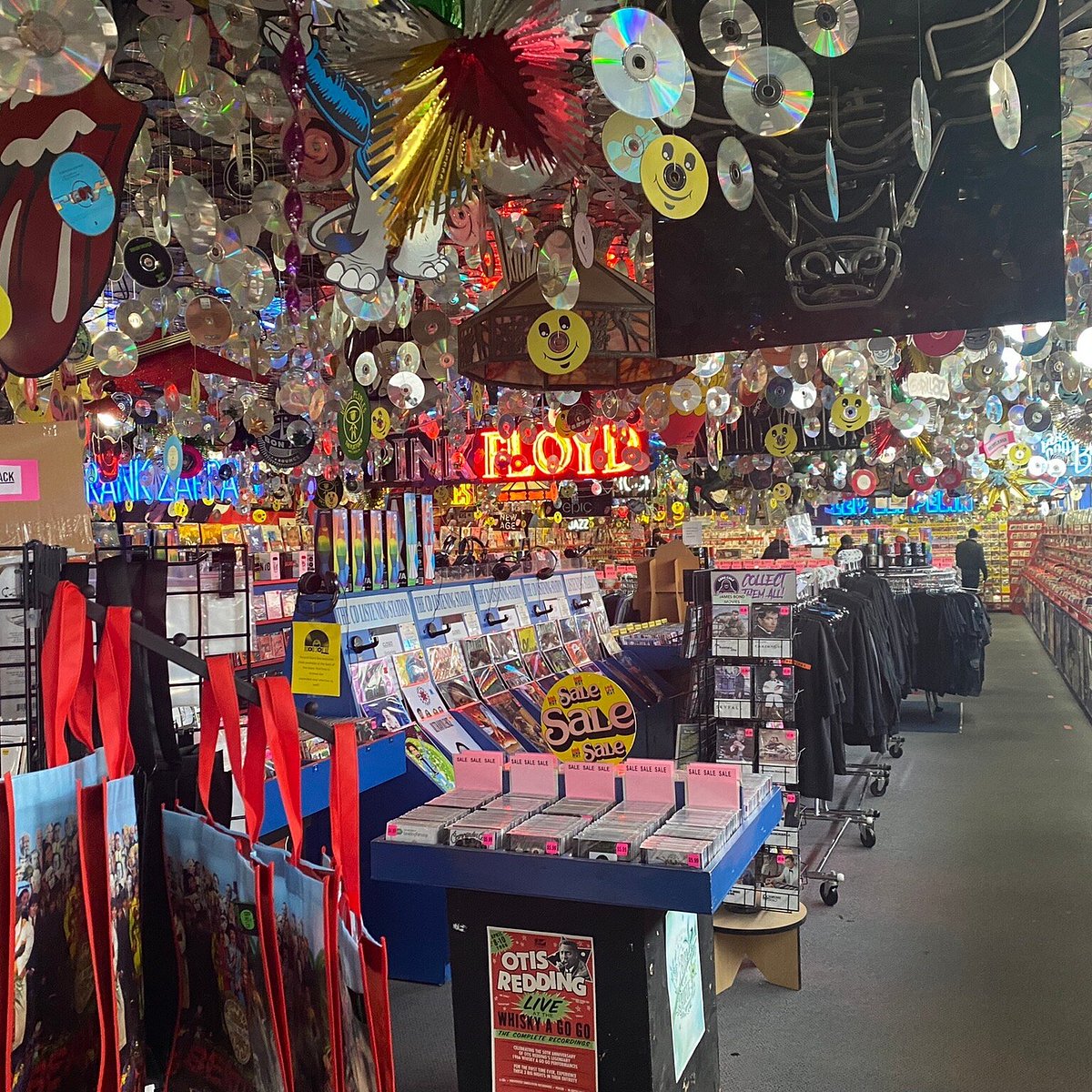
image: interior of Rolling Stone Records, Chicago