Artists Are Building More Than Art
Most artists dream of having their work hung in galleries, not opening one of their own. But increasingly, many seem more interested in building something much larger.
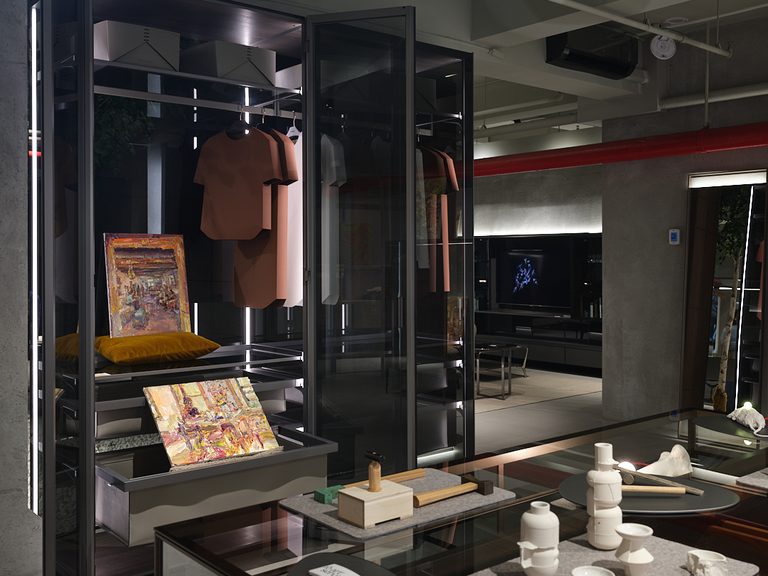
Earlier this month, artist Rashid Johnson and artist Sheree Hovsepian announced the opening of Casa Gràcia, a new artist residency in Italy developed in partnership with Hauser & Wirth. Set within a restored historic property in Umbria, the residency will host artists, writers, and curators, offering them the precious and rare gift of uninterrupted time and space to think, make, and experiment.
The announcement was met with enthusiasm, but also a healthy dose of skepticism. In the comments on the Instagram post announcing the opening of the space, some questioned whether projects like these simply create another layer of exclusivity within an art world already defined by access, networks, and privilege. Obviously a fair question. As opportunities become more competitive, who actually benefits from spaces designed to support creativity? But focusing only on that tension risks losing sight of a much larger shift taking place.
Over the past two decades, a growing number of artists have expanded their practices beyond the studio, taking on the role of institution builders. Rather than waiting for museums, universities, or traditional cultural organizations to create opportunities, they have begun creating those opportunities themselves.
In Chicago, Theaster Gates transformed vacant buildings into a network of cultural spaces through Rebuild Foundation, demonstrating how art can become a part of neighborhood infrastructure. In New Haven, Titus Kaphar founded NXTHVN, a fellowship and apprenticeship program designed to connect emerging artists with professional mentors while investing in the city around it.
Long before either of those projects existed, Rick Lowe’s Project Row Houses reimagined what an artist-led organization could be, using art as a catalyst for housing, education, and community development in Houston. More than simply places to exhibit work, these initiatives are attempts to reshape the conditions under which creative work happens. That distinction feels more important than ever.
The enduring mythology of the artist has long been centered on the individual: the lone painter in a studio, the solitary photographer, the singular creative genius. Today’s artist-led institutions offer up something different. They ask what happens when an artist’s creative success is used to build ecosystems that send the elevator back down for young artists rather than focusing on their own careers.
Of course, not every project will be equally accessible. Some will inevitably reflect the rigid structures and fiercely protected hierarchies of the art world that made them possible. The challenge for these new institutions is not simply to exist, but to remain genuinely open to new voices, new perspectives, and artists who might otherwise remain outside established networks.
Maybe that is the standard by which they should ultimately be judged. Not by the prestige of the founders or the beauty of the architecture, but by the opportunities they create for people who come next.
For emerging artists, residencies have always represented more than a place to work. They offer something that has become increasingly scarce in contemporary life: time without interruption, space without immediate expectation, and the freedom to follow an idea before it has proven its value. That is probably why this movement feels significant.
Time, space, and community have always been among the rarest materials in creative life. More artists are choosing to build those, too.
image: The Residency at Casa Gràcia. Courtesy Rashid Johnson and Sheree Hovsepian. Photo: Daniel Schäfer