Why Tavin Davis Paints Against the Pace of Modern Life
There is a tendency to mistake calm paintings for calm lives.
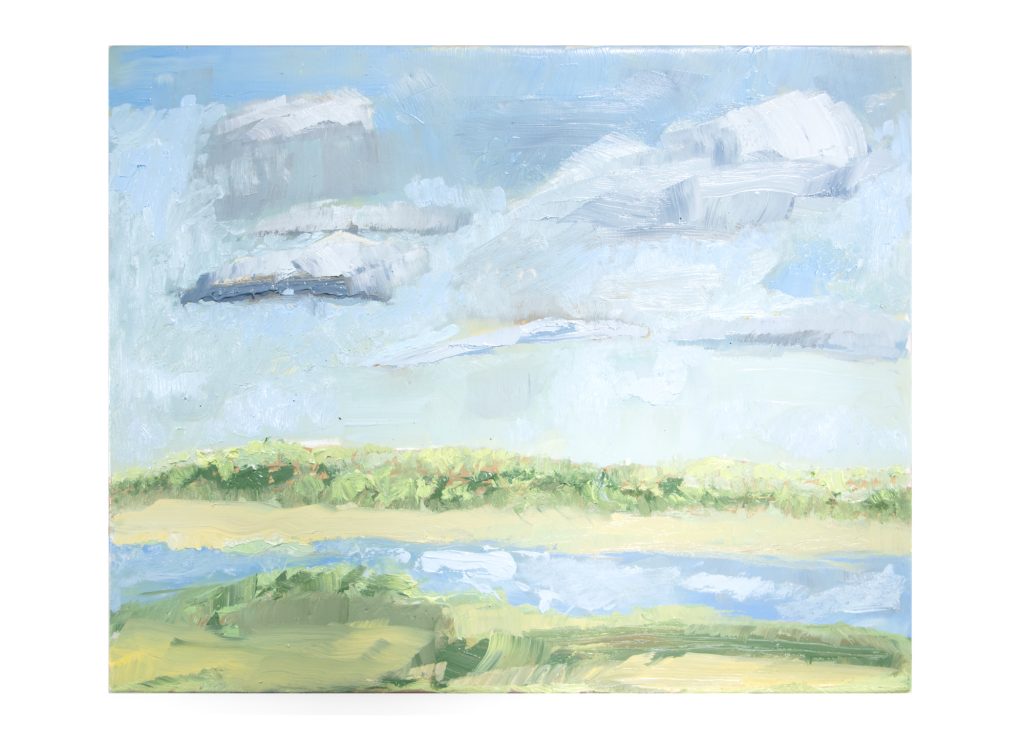
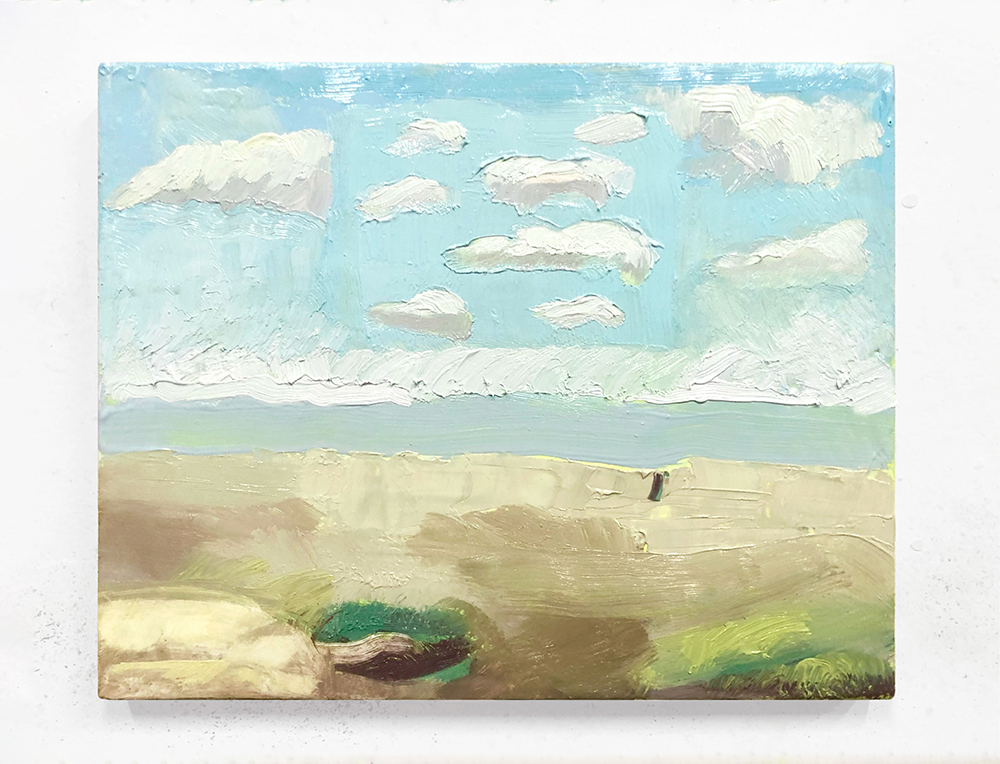
Looking at Tavin Davis’ work, it would be easy to imagine an artist responding to serenity. Broad skies stretch above open horizons. Trees stand alone against expansive fields. There is room to breathe. The compositions feel unhurried, almost detached from the relentless pace that defines so much of contemporary life. That assumption, however, couldn’t be further from the truth.
“I get this question about memory pretty often because I’m from Montana,” Davis says. “It doesn’t have anything really to do with a memory of a place… The work comes out of a response to my own state of mind, which is one of overwhelm, stress, anxiety, fear, and high tempo.” The paintings are not carefully noted records of tranquility. They are attempts to arrive there.
“I’m kind of trying to paint myself into the emotional and mental state the paintings propose,” he explains. “The image in the painting and the act of making the painting are both aiming at the same mental and emotional state.”
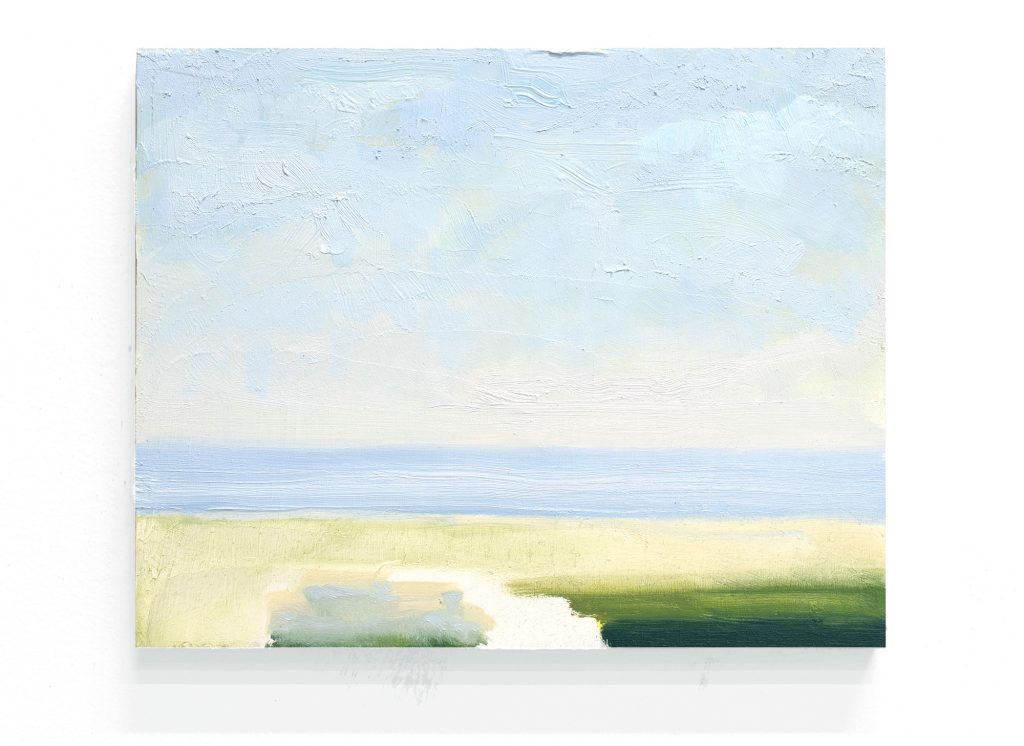
That distinction transforms the work. Rather than documenting landscapes, Davis constructs psychological spaces. His paintings become places where attention narrows, distractions fall away, and the mind is allowed, even if briefly, to settle. They are less about geography than they are about emotional conditions.
It is an approach that feels increasingly resonant during a moment defined by acceleration. Every day asks us to consume more information, absorb more opinions, respond more quickly, and divide our attention into ever smaller fragments. Davis’ paintings move in the opposite direction. They are not trying to compete with the speed of the world around them. They step outside of it.
That impulse, surprisingly, has roots in the visual culture that first shaped him. Before painting became central to his life, Davis was immersed in BMX culture, punk graphics, and counterculture aesthetics. While those references may seem distant from the restrained imagery that defines his work today, he sees them as deeply connected.
“I think that’s exactly what I see as being counterculture about it,” he says. “It’s not pop culture. It’s not fancy effects and new technology. It’s not Hot Topics nor trying to prove a position regarding trending conversations.”
For Davis, resistance does not require confrontation.
“The visuals may not be aggressive nor explicit,” he says, “but that is, driven from my own needs, a refusal. It’s my own little way of giving a grass-covered, blue bird, high noon middle finger.”
It’s a wonderfully unexpected description for paintings that appear so generous and sensitively executed on the surface. Yet that generosity is precisely the point. Because our cultural lens is increasingly defined by spectacle and immediacy, choosing restraint becomes its own statement.

“The world is so loud and assertive and demanding and explicit already,” Davis says. “I don’t see why I’d ever want to try to add to the mess of all that.”
Today, Davis lives and works in Chicago, where the intensity of urban life has only reinforced the role painting plays within his daily practice. Somewhat paradoxically, he believes the work depends on that tension.
“Well, I guess the work is only possible because I do live in such a busy and urban environment,” he says. “If I lived in a place where too little was happening… I’d probably paint a bit less as I wouldn’t need it quite as intensely as I do now.” For Davis, painting becomes less an occupation than a form of restoration.
“I like all of that alone time,” he says. “I feel really far away from everything else in the world that’s going on for a bit. It’s as nice of a feeling as feeling a little drunk or something. Kind of a nice buzz. A happy feeling.”
There is something refreshingly direct about the way Davis talks about making art. He does not romanticize the studio or suggest that creativity exists on some elevated plane. Instead, he describes painting as something remarkably functional. A practice that helps him navigate the emotional realities of contemporary life.
That same practicality shapes the way he thinks about viewers. Rather than asking audiences to decode elaborate meanings, he simply hopes the paintings offer something worthwhile.
“The work… isn’t so much a delivery tool as much as it is a record or a document,” he says. “It’s evidence. The leftovers of trying to get my own head and heart to a certain place.”
Then comes perhaps the simplest expression of his philosophy.
“If someone comes to a painting and just thinks it looks like a nice day,” he says, “then I’d be elated to hear it. That’s what it’s about after all. It’s my way of putting painting to work. To use it for a nice or nicer day.” It is an unexpectedly modest ambition, but perhaps an ever more necessary one.
Not every painting needs to overwhelm us with meaning and gesture. Some simply remind us that another pace, another rhythm, another way of paying attention remains possible.
That, in itself, feels like a meaningful contribution.
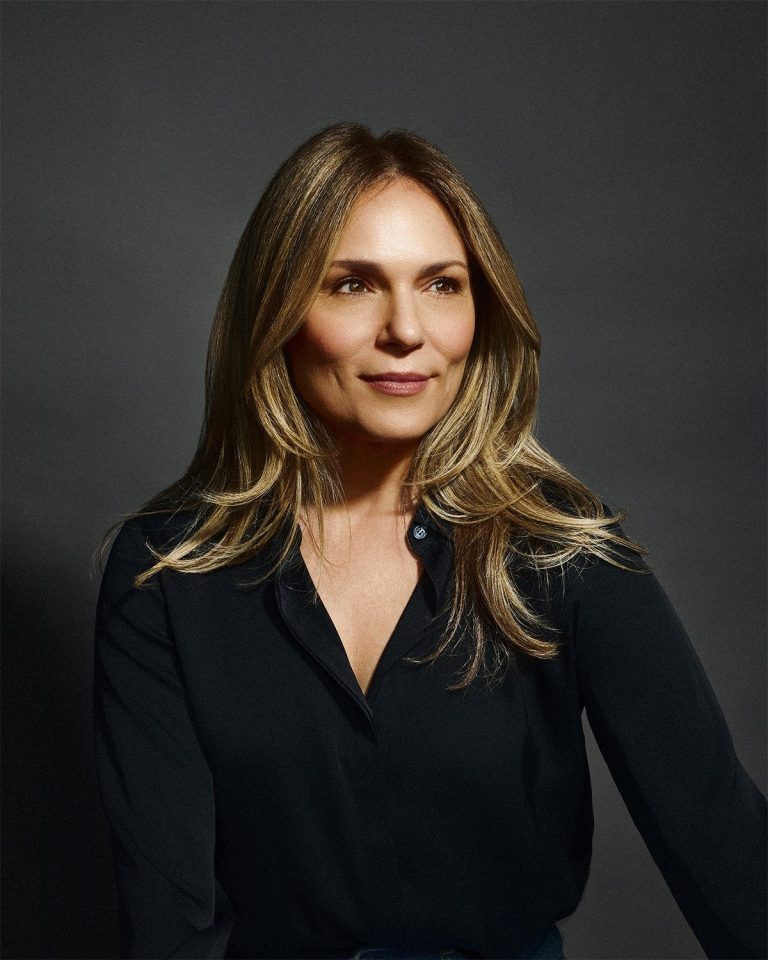
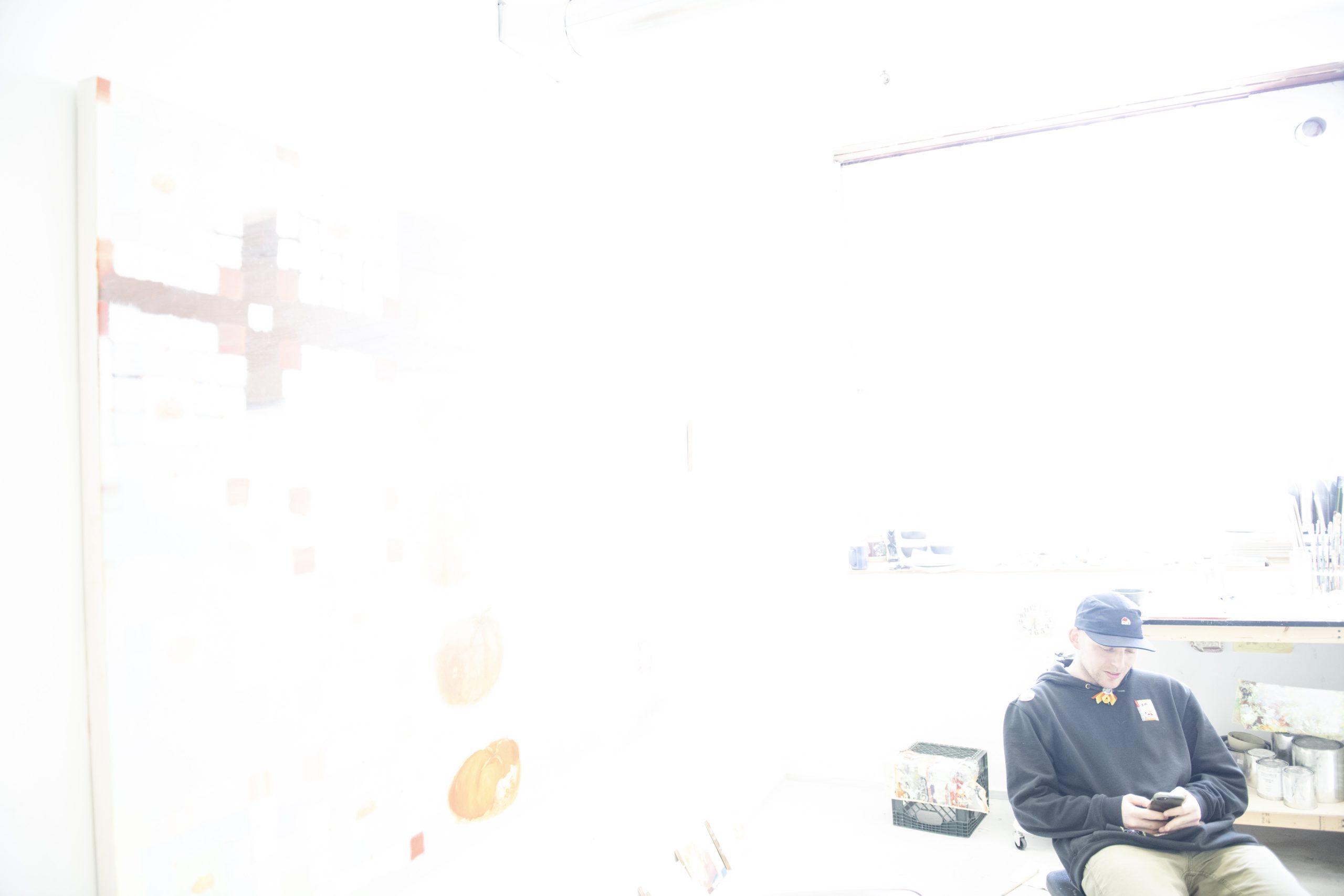
image: Tavin Davis in his Chicago studio. photo by M.M.M.