Glamour, Grief, and the Art of the Thriller
Amina Akhtar understands better than most people that surfaces are rarely just surfaces. Long before she became known for her sharp, darkly funny thrillers, Akhtar spent years inside the fashion industry, writing at the speed of the internet for publications like Vogue, Elle, and The Cut (where she was Founding Editor), observing a world built on image, performance, cutthroat aspiration, and exhaustion.
It is difficult not to see that history threaded through her fiction now. Her novels are filled with women who perform versions of themselves, characters caught between desire and self-destruction, people carefully curating appearances while chaos hums along underneath. But what makes Akhtar’s work distinctive is not simply that she writes about polished worlds with hidden darkness. It is the razor-sharp way in which she understands the psychology of concealment itself.
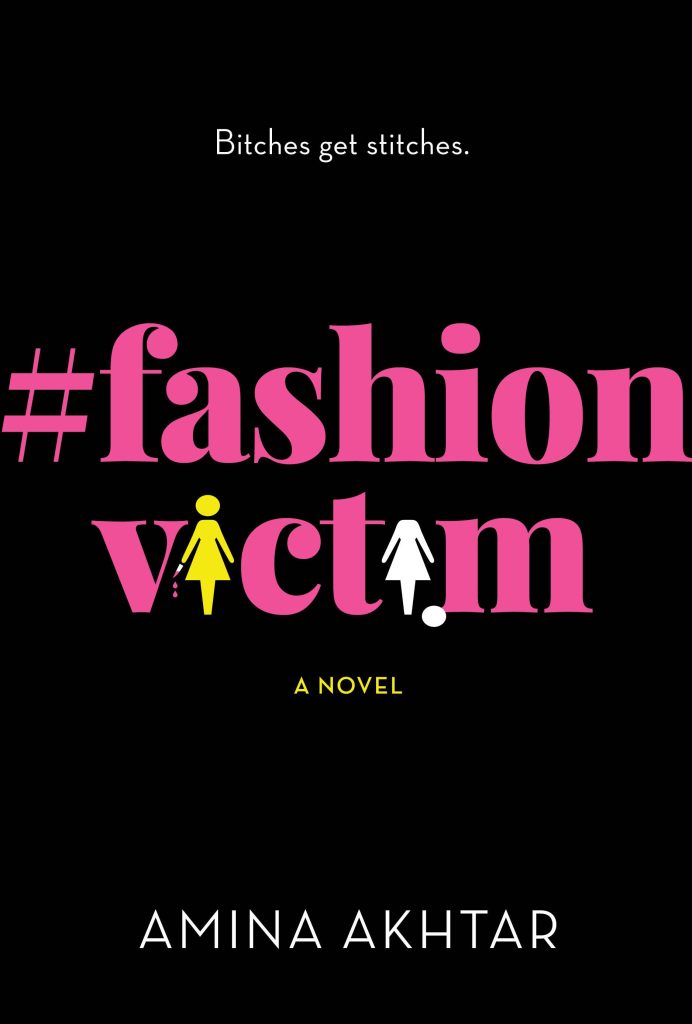
There is an unusual tonal balance in Akhtar’s work: satire without cynicism, violence without heaviness, humor sharp enough to punch a hole right through tension at exactly the right moment. Her breakout novel #FashionVictim introduced readers to a serial killer operating inside the fashion world, a premise outrageous enough that publishers initially rejected it for being “batshit crazy.” Eventually, that unpredictability became part of its appeal. Since then, Arizona-based Akhtar has continued building a body of work that feels both playful and psychologically acute, blending thriller mechanics with cultural observation, absurdist humor, and emotional undercurrents that often arrive unexpectedly.
Speaking with Akhtar, what emerges most clearly is her refusal to romanticize either creativity or the industries surrounding it. She talks about writing with the same clarity and practicality she once brought to fashion journalism: as labor, repetition, revision, and endurance. Years of producing rapid-fire digital content taught her not to fetishize the process. “You don’t have time to agonize over a comma,” she says. “You write it, you edit it, you post it.” That speed eventually became a kind of creative discipline. Even now, she describes herself as fundamentally unprecious about her work, willing to rewrite entire manuscripts if it means making them stronger. “It’s not this precious gem,” she says. “It’s just a work that I need to make better.” Refreshing, to say the least.
That perspective feels increasingly rare in contemporary literary culture, where writers are often encouraged to mythologize both themselves and their work. Akhtar resists that instinct almost aggressively. Part of that comes from surviving the instability of fashion media, where visibility and disposability coexist constantly. “Being close to celebrity really taught me not to believe my own hype,” she says. “Everything that goes up comes down.”
She speaks candidly about the loneliness that followed her very public layoff from Elle at the same time her mother died, and how quickly people she thought were friends disappeared once she no longer held professional power. “They couldn’t get into Elle anymore,” she says plainly. “They were no longer my friends.”
That experience reshaped the way she thinks about ambition, success, and proximity to attention. Even now, after multiple books and growing recognition, she remains deeply skeptical of creative ego. “Stay grounded,” she says repeatedly. “Know who your people are.” The steadiness of that perspective feels embedded in her fiction too. Her characters often chase status, beauty, desirability, or validation, but Akhtar writes those pursuits less as fantasies and more as systems people become trapped inside.
Fashion itself, she insists, is far more psychologically and intellectually demanding than outsiders understand. “People think it’s frivolous,” she says. “But it’s a hard career.” What interested her most was the disconnect between presentation and reality: impeccably dressed people quietly unraveling underneath carefully constructed exteriors. “Everybody looked so pulled together,” she says. “Perfect outfits, great shoes, hair done. But they’re having breakdowns in the bathroom.”
That tension between visibility and concealment became foundational to the way she thinks about character. “Everybody in fashion is hiding something.”
It makes sense, then, that thrillers became the form that ultimately suited her. Akhtar approaches suspense less through spectacle than through psychology, pacing, and accumulation. She admits she had no idea how to structure a novel when she first started writing fiction after her mother died in 2014. What began as grief eventually became creative survival. “There’s a lot of anger in grief,” she says. “And I poured that all into the book.”
For a year, she stopped dating, stayed home, and wrote obsessively, building the manuscript that would eventually become #FashionVictim. “It was the most cathartic thing for me,” she says. “At the end of that year, I felt less broken.”
That emotional directness is perhaps what gives her work its particular energy. Even when her stories become absurd, violent, or satirical, there is always something emotionally recognizable underneath. Humor, especially, becomes a structural tool for navigating darker subject matter. “I like to make the reader laugh while talking about serious subjects like racism or the issues in Desi auntie culture,” she says. “I think it makes it easier for people to take things in.”
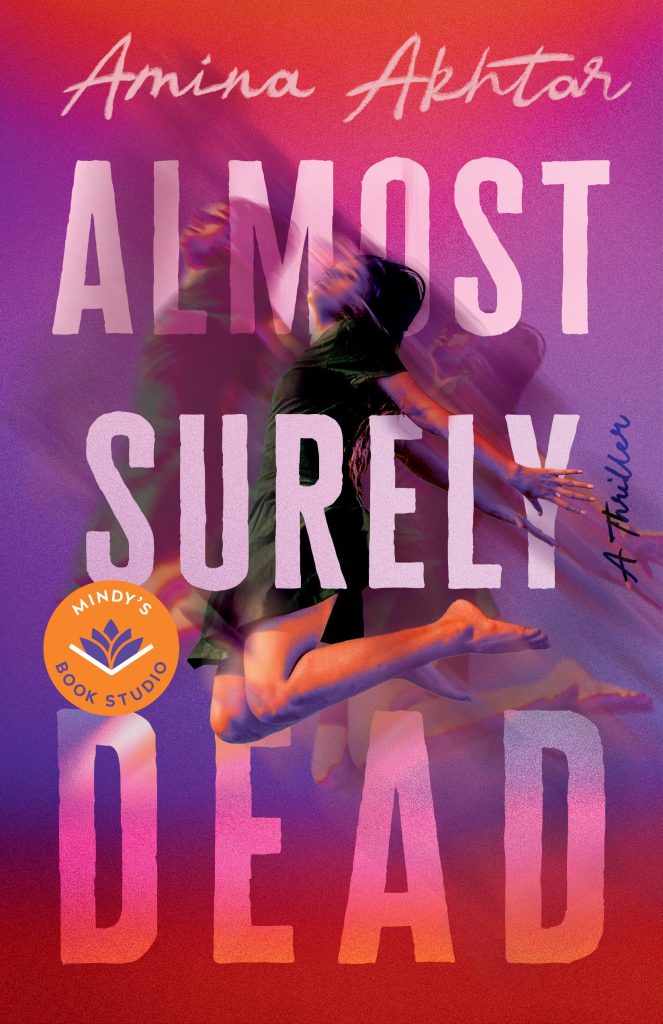
The comedy in her novels often arrives precisely where tension peaks, creating an unsettling rhythm that feels deeply intentional. Akhtar laughs while describing a recent line involving a beheading and fresh sushi in the same sentence. “The absurdity of life and people kills me.”
Her influences reflect that same blend of voice, tension, and tonal flexibility. She cites writers like Caroline Kepnes, whose psychological intimacy transformed the thriller genre, alongside crime writer Kellye Garrett, whom she credits with helping her understand structure more deeply. But Akhtar’s voice ultimately feels distinctly her own: conversational but controlled, darkly observant without collapsing into nihilism.
What also becomes clear in conversation is that Akhtar’s relationship to fiction was never tentative. Even before publication, even before validation, she approached writing with startling certainty. “You have to be very delusional when you’re going into creative pursuits like this,” she says. “Believe it from the get-go.”
That delusion, in her framing, is not arrogance so much as endurance: the willingness to continue despite rejection, instability, or uncertainty. For two years, publishers rejected #FashionVictim because they found the premise too strange. Eventually, one said yes. “It takes one yes to make it work,” she says.
There is something genuinely refreshing about the lack of mythology in the way Akhtar speaks about creativity. No tortured genius narrative. No fetishization of suffering. Just persistence, rewriting, instinct, and a willingness to keep going. Twelve years after deciding to stop dating and start writing fiction, she jokes that she is still single, but still writing too. The second part, at least, feels non-negotiable, which is as it should be.
learn more about Amina and all of her novels here.
author image courtesy of Orlando Pelagio