Stewardship, Diaspora, and the Legacy of Koyo Kouoh
American Friends of Zeitz MOCAA and the quiet labor of building cultural connections without simplification.
What does cultural care look like when it must move across oceans, histories, and unequal economies, when it must resist the gravitational pull of spectacle, market appetite, and the Western gaze? For those stewarding the work of Zeitz Museum of Contemporary Art Africa and its U.S.-based counterpart, American Friends of Zeitz MOCAA, the answer begins with something deceptively simple: respect.
It is a word that surfaces repeatedly in conversation with the organization’s leaders– not as a platitude, but as a governing principle. Respect for artists. Respect for complexity. Respect for the fact that African art does not need translation so much as space.
Founded to support Zeitz MOCAA, the largest museum dedicated to contemporary art from Africa and its diaspora, American Friends of Zeitz MOCAA plays a crucial role in extending the museum’s vision beyond Cape Town while remaining accountable to it. That vision was shaped decisively by Koyo Kouoh, the museum’s former Executive Director and Chief Curator, whose death earlier this year left a profound absence in the global art world. Kouoh did not simply lead Zeitz MOCAA; she gave it moral clarity. Under her leadership, the museum became a site of intellectual rigor and care, committed to African artists telling their own stories– fully, messily, and without apology.
American Friends exists not to dilute that vision for U.S. audiences, but to protect it.
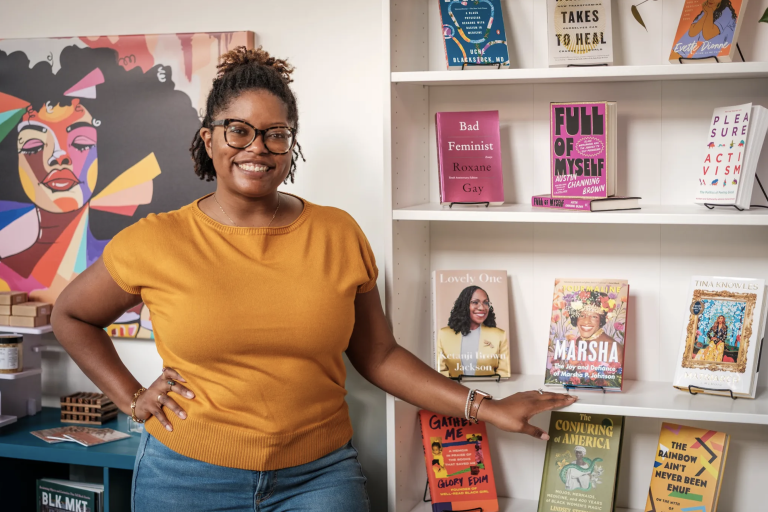
“I think when we talk about cultural care, it really comes down to respect and honor,” says Naledi Khabo, Co-President of American Friends and CEO of the African Tourism Association. “That applies whether you’re talking about art, history, music, fashion– anything that’s being shared.”
Khabo’s background spans tourism, public advocacy, and leadership across sectors, and that perspective shapes how she understands the stakes of cultural export. African culture, she notes, already drives much of global culture, from music and fashion to film and visual art. The question is not whether it will travel, but how.

“We talk a lot about African products as exports,” she explains. “So the responsibility becomes: how do we do that in a way that’s thoughtful and full of respect? How do we make sure we’re accountable– to artists, to the art, to the culture itself– and not just chasing opportunity or commercialism?”
That accountability, she emphasizes, is rooted in partnership rather than profit. American Friends’ role is not to frame African art as exotic or consumable, but to support its circulation without flattening it.
“I reject the notion that it’s our responsibility to interpret Africa for the West,” Khabo says plainly. “Our responsibility is to make sure artists can speak for themselves, and that the stories being told reflect the reality that Africa is not a monolith.”
For Roger Ross Williams, an Academy Award–winning filmmaker and founding board member, this work is deeply personal. As an African American artist, his involvement with American Friends is about sustaining a living connection to the continent, not symbolically, but through relationships with artists, studios, and communities.
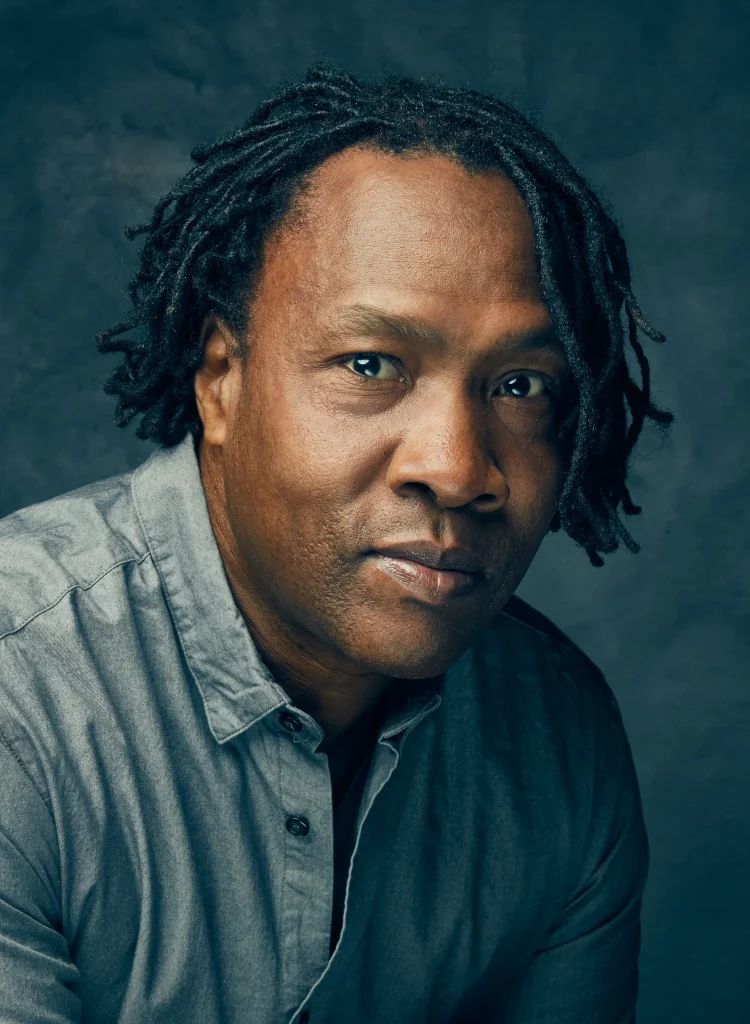
“Being connected to artists on the continent has been incredibly fulfilling for me,” he says. “It’s about community– the African diaspora across the globe, and being in real conversation with one another.” That conversation often takes place far from institutional walls. Through American Friends–organized art trips to places like Nairobi, Senegal, Uganda, and Rwanda, members engage directly with artists in their own environments.
“To meet artists where they live, in their studios, in their spaces– it’s a powerful thing,” Williams says. “You’re not just looking at finished work. You’re witnessing process.” Process, in fact, is central to how both Zeitz MOCAA and American Friends understand stewardship. Williams recalls the museum’s artist-in-residence program, where an artist’s studio is transformed into a public-facing space within the museum itself.
“You walk through, and you see how the work is made,” he says. “It changes the relationship entirely. It’s not just about the object, it’s about how the artist thinks, how they live with the work as it’s forming.”
That emphasis on lived experience and exchange is echoed by Claire Breukel, Head of American Friends of Zeitz MOCAA and a South African–born curator whose work spans continents and institutions. Breukel worked closely with Kouoh for several years and speaks of her philosophy as one grounded in long-term care rather than transactional support.
“Koyo used to say, ‘People are more important than things,’” Breukel reflects. “It sounds simple, but it guided everything she did.”
That ethos shaped how Zeitz MOCAA approached artists, exhibitions, and supporters alike. Rather than chasing one-off donations or high-visibility moments, Kouoh advocated for sustained commitment– building infrastructure, publishing scholarship, and foregrounding artists who had long been overlooked or underrepresented.
“She was adamant about producing books for every exhibition,” Breukel notes. “Publishing was not an afterthought; it was part of how you make sure the work lives beyond the moment.”
American Friends extends that commitment through programs that materially support artists and cultural workers, including museum fellowships that bring emerging professionals from across the Pan-African world to Cape Town for a year of study and hands-on experience. Fellows work across departments at Zeitz MOCAA while completing postgraduate degrees, emerging equipped not just with credentials, but with institutional fluency.
“We’re training the next generation of museum professionals,” Breukel explains. “That kind of investment changes what’s possible– not just for individuals, but for the field.”
As global institutions grapple with questions of restitution, canon formation, and who gets to steward African cultural heritage, these efforts take on added weight. Khabo speaks candidly about the unfinished work of confronting colonial legacies, from the return of looted artifacts to the persistent imbalance of who controls African narratives.
“There’s still so much colonialism embedded in how African art is held and framed globally,” she says. “We have a responsibility to reshape that, to advocate for African storytelling, African expression, and African art being seen on its own terms.”
For Williams, Kouoh’s greatest gift was the clarity she brought to that responsibility. “When she arrived, the museum was still defining itself,” he recalls. “Koyo gave it purpose. She made it a home, not just a place to view art, but a place to experience artists as people.”
Her passing leaves an absence that cannot be filled, but those who worked alongside her are clear-eyed about what comes next. Legacy, they insist, is not something to preserve in amber. “We don’t honor Koyo by freezing her vision,” Khabo says. “We honor her by extending it.”
Breukel agrees. “Her work taught us that care is not passive. It’s active. It requires commitment, patience, and courage.”
In that sense, American Friends of Zeitz MOCAA is less an auxiliary organization than a continuation– a transatlantic practice of care that insists African art deserves to move through the world without being reduced by it.
Learn more about American Friends of Zeitz MOCAA here.
Footnotes: The Work of Care
Some cultural work resists urgency. It asks for patience, proximity, and attention over time. The practices below echo the philosophy at the heart of American Friends of Zeitz MOCAA and Koyo Kouoh’s vision: that art is not simply presented, but stewarded.
Spaces That Hold Process
RAW Material Company (Dakar): A site where artistic practice, research, and critical thought unfold without pressure toward spectacle.
The Bag Factory (Johannesburg): An artist-led space rooted in experimentation, residencies, and long-term dialogue.
Black Rock Senegal: A residency program offering artists time and distance without demanding a finished outcome.
Writing as Preservation
Zeitz MOCAA exhibition catalogues: Publishing as an extension of care, ensuring that exhibitions live beyond their moment.
Condition Report on Art History in Africa: A reminder that archives are constructed, and that expanding them is ongoing work.
Seeing Work Mid-Formation
Zeitz MOCAA’s artist-in-residence program: Inviting audiences into process rather than only arrival.
Studio visits as methodology: Central to American Friends’ art trips, emphasizing presence over consumption.
Artists Who Refuse Simplification
Otobong Nkanga, Zanele Muholi, Dineo Seshee Bopape, and Santu Mofokeng engage in studio practices that insist on complexity, interiority, and self-definition.
Legacy, Understood Differently
Koyo Kouoh often resisted the idea of legacy as something to be preserved. Instead, she understood it as something that must remain alive — extended, challenged, and carried forward.