SPLIT LEVEL and Rethinking the Art Fair
For most of its modern history, the art fair has been built around a simple idea: put many galleries in one large room, give each one a defined space, and bring collectors to them.
The model works. It works because it solves a very real problem. Instead of traveling from gallery to gallery, collectors can see a large cross-section of the market in a single visit. Galleries can meet new audiences, deepen relationships with existing collectors, make sales, and put their artists in front of curators, advisors, and other industry people. The fair is exhibition, marketplace, and social infrastructure at once. It is also, increasingly, A LOT.
Walk into a traditional contemporary art fair, and the experience is familiar: rows of standardized booths, white walls, bright lighting, art carefully arranged inside clearly defined territories. Each gallery has a few hundred square feet to make its argument, often while surrounded by dozens or hundreds of other galleries doing the same thing. For established galleries with deep collector networks and the resources to absorb the costs, the model can still be enormously valuable. For smaller galleries, particularly those working with emerging artists at lower price points, the equation is harder.
That tension is where SPLIT LEVEL gets interesting.
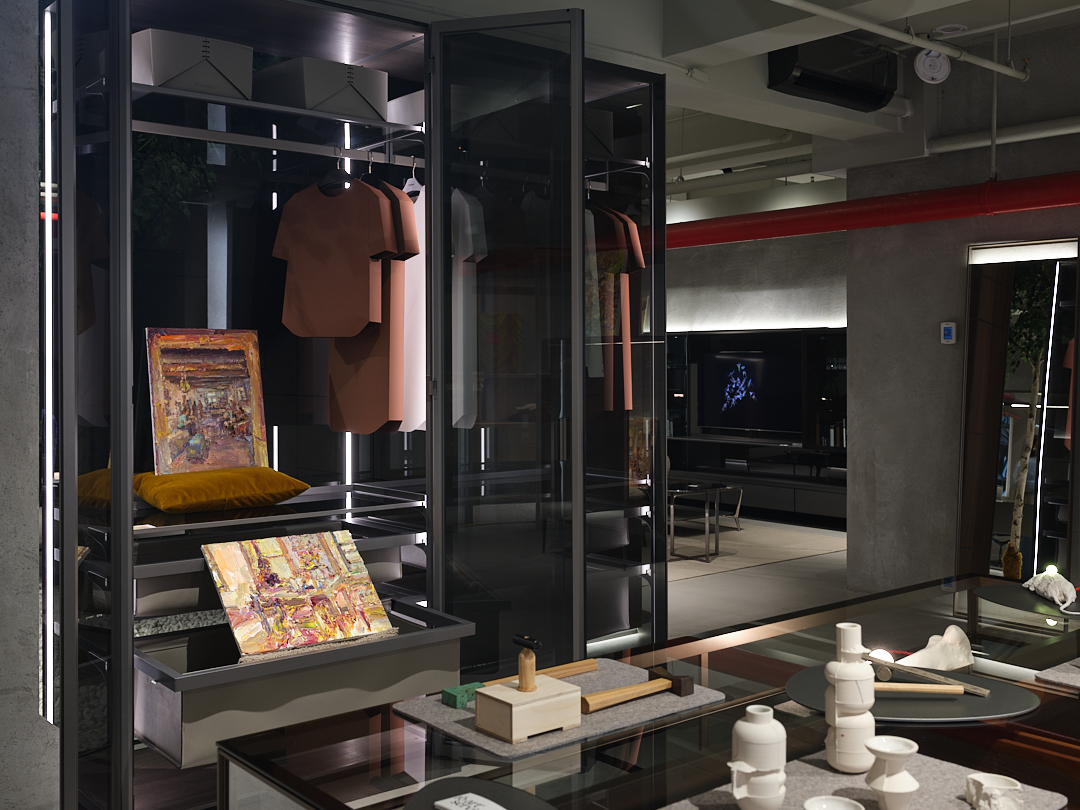
Founded by artist and gallerist Jaqueline Cedar, SPLIT LEVEL was conceived as an alternative to the traditional booth-based fair. Its first edition took place in 2025 inside Rimadesio’s New York showroom, a design environment filled with furniture, architectural elements and domestic references rather than rows of temporary white walls. The second edition returns this fall with a larger group of exhibitors, continuing the fair’s emphasis on emerging artists, experimental gallery models, and shared programming. The setting changes the premise before anyone has even looked closely at the art.
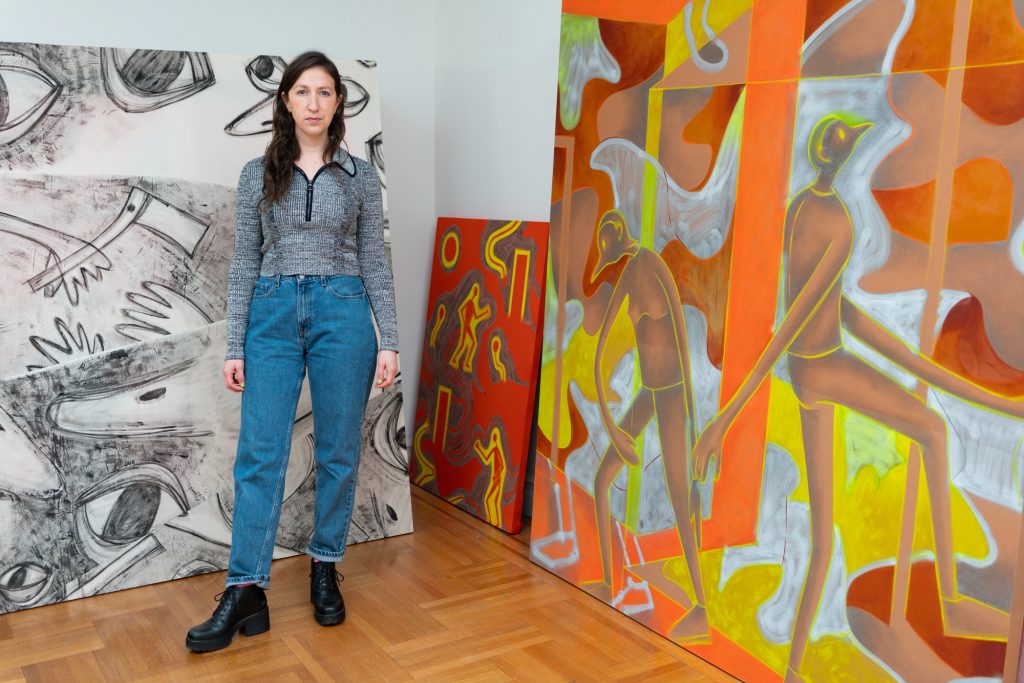
Instead of entering a sequence of booths, visitors move through a designed environment where artworks exist alongside furniture, objects and one another. There are places to sit. There are talks and performances. There are fewer physical barriers between exhibitors. The result is less like walking down an aisle of individual galleries and more like moving through a series of overlapping ideas.
For Cedar, that is not incidental. It gets at what she thinks the fair can actually be good at.
“As a young gallery, I find the most beneficial element of participating in an art fair to be the pooling of audiences and context-building that can occur in proximity to like-minded spaces,” she says. In other words, the thing worth preserving isn’t necessarily the booth. It’s the proximity.
The traditional fair emerged in part because bringing dealers together created a powerful network: collectors could compare work, galleries could encounter new audiences, and the market could operate in a concentrated physical environment. The booth became the basic unit of that system. It gave every gallery its own territory and made the fair navigable, legible and commercially efficient.
But the very things that made the model successful can also make it exhausting. The visitor moves quickly. The gallery has a limited amount of time to make an impression. Emerging artists can find themselves competing for attention with artists who already have established markets. And for a young gallery, the cost of entering the room can be difficult to justify when the artists it represents are still developing careers.
“The largest challenge is the cost of entry in relation to lower price points for the emerging artists we represent,” Cedar says.

That is not a small problem. A booth at a conventional fair can cost thousands or tens of thousands of dollars before a gallery has shipped a single artwork, booked a hotel room, or paid staff. At Chicago Art Fair, for example, 2026 booth fees range from $3,695 for a 10-by-20-foot space to nearly $22,000 for a 40-by-30-foot space, with a required marketing fee on top. For a gallery selling emerging artists at relatively modest price points, the math can become an exercise in hoping volume makes up for margin. And then there is the other problem: attention.
“As a frequent fair-goer, I’m also tuned into the oversaturation that visitors can experience at larger fairs,” Cedar says. SPLIT LEVEL’s answer is not to abandon the fair, but to pare it back.
“I wanted to pare down expenses and focus on our core values– collaborative and overlapping programs in an environment that is welcoming and encourages audiences to stay longer, engage in conversation, and participate in our community.”
That last word is worth lingering over. Community is often used loosely in the art world, but the physical design of SPLIT LEVEL actually gives it somewhere to happen. Seating areas encourage people to stay. The lack of walls allows works from different galleries to exist in conversation. Performances, screenings and talks turn the fair into something other than a sequence of transactions. It also changes what it means to encounter a work.

Katy Diamond Hamer, whose projects are among the exhibitors, sees the domestic setting as part of the point. “Changing the context of an art fair, specifically, SPLIT LEVEL provides collectors the opportunity to experience works in what could be considered more of a domesticated, albeit designed, space.” That distinction matters because art fairs have historically asked us to look at art in an environment that looks very little like the environments where most of us actually live with it.
The white booth is useful. It isolates the work. It creates consistency. It allows collectors to focus. It gives a gallery control over the presentation of its artists. But it also creates a particular psychological frame: “this is art, this is a fair, this is a commercial transaction, pay attention accordingly.” SPLIT LEVEL introduces another possibility. What happens when art is allowed to behave a little more like it might in someone’s home?
“The fair is less about traditional booths and white walls,” Hamer says, “and unlike other art fairs, the intimate setting removes the pressure that some people might feel in a traditional white cube.” The work does not disappear into the environment. Ideally, the opposite happens. It becomes possible to see what a painting, sculpture, lamp or installation might actually do to a room. Hamer’s own goal is to “infiltrate our designated space with color, light, and good energy.”

That word, infiltrate, feels especially apt. The artwork is no longer politely contained within its allotted territory. It is asked to participate in the atmosphere around it. This is where the fair starts to become something closer to an exhibition than a marketplace.
And perhaps that is one reason smaller fairs have become such an interesting part of the contemporary art landscape. In recent years, alternative models have proliferated around major art-fair weeks, from hotel-based fairs to exhibitions staged in homes and design spaces. The common thread is not necessarily that smaller is better. It is that changing the physical conditions changes the social ones too.
SPLIT LEVEL is part of that larger reconsideration, but it has a particularly useful proposition because it does not pretend that commerce is the problem. People are there to see and buy art. Galleries need to sell work. Artists need collectors. The fair still performs its fundamental function. It simply asks whether that function has to happen inside the same architecture every time.
For Hamer, the future of the fair is difficult to predict. “As far as the art fairs of the future, that is almost too difficult to think about!” she says. “While so much has moved online, I think that fairs will continue to occupy physical space.” That may be the most important part.
The internet has made it easier than ever to see art. Galleries can reach collectors across continents. Artists can build audiences without institutional representation. Auction results, exhibition histories, and entire bodies of work can be researched from a phone. The physical fair has to justify itself against all of that convenience. Its advantage may be precisely what the internet cannot reproduce: being in the same room. But being in the same room is not enough. The room matters.
Artists may have a stake in that distinction too. The traditional booth model asks an artist’s work to adapt to a temporary commercial environment, often alongside work by dozens of other artists. A different kind of fair can offer another possibility: the chance for work to have a physical relationship to objects, architecture, furniture, performance, conversation and the work of other artists. The question becomes less “How do we make this booth stand out?” and more “What happens when these things are allowed to exist together?”
Cedar’s own history makes the question particularly relevant. Before SPLIT LEVEL, she developed Good Naked as an apartment-based gallery, eventually expanding into pop-ups, collaborative exhibitions, and other unconventional settings. The fair feels less like a departure from that history than an extension of it: taking the intimacy and flexibility of a small project space and asking whether it can operate at the scale of a fair. That may be what artists are ready for, too. Not necessarily a rejection of the art fair, but a chance to rethink what the fair is for.
The old model was built around concentration: concentrate galleries, collectors, inventory, attention, and transactions in one place. It made sense when access was the problem. Today, access is rarely the problem. There is more art available to see than anyone could possibly see. Attention is the scarce resource. So is genuine conversation.
A fair that gives people somewhere to sit might be making a more consequential decision than it appears. A fair that lets artworks overlap might be acknowledging that artists do not actually work in isolated booths. A fair that makes room for performances, talks, and informal encounters might be recognizing that collecting art has always been about more than acquiring objects. It is about entering a world. Maybe the next version of the art fair should make that world easier to enter.
SPLIT LEVEL does not claim to have figured out what fairs will look like in 20, 30, 50, or 100 years. No one could. But it does offer a useful experiment: keep the audience, keep the artists, keep the possibility of discovery and sale, then change the frame around them. That may be enough to make us look differently.
At the art fair, as in the gallery, the architecture is never neutral. It tells us how to move, where to look, how long to stay, and what kind of encounter we’re supposed to have. Change the room, and you might change the art fair. You might even eventually change the way we look at art.
SPLIT LEVEL runs October 1- 3 in New York.
main image: an install from SPLIT LEVEL 2025.