The Value of Not Knowing
One of the best things about interviews is that the most interesting ideas often surface when you least expect them.
While recently speaking with retail and hospitality designer Chele McKee for our upcoming issue, she mentioned something that’s stayed with us ever since: approaching every project with a beginner’s mind. It wasn’t presented as a philosophy or a creative strategy. It came up almost in passing, as if it were a long-established north star for her practice. But the more we thought about it, the more it seemed to describe something many of the most compelling creative people have in common.
There comes a point in almost every creative career when experience begins to compete with curiosity. The longer we work in a field, the more fluent we become in its language. We recognize patterns. We develop finely honed instincts. We know what has worked before, and what will probably work again. Expertise is invaluable. But it can also become surprisingly constricting. Familiarity has a way of convincing us we’ve already seen what’s possible. It’s an underrated blind spot.
A beginner’s mind doesn’t mean forgetting what you’ve learned. It means refusing to let experience become a substitute for observation. It means staying open enough to ask questions that may seem obvious, to follow unexpected connections, and to resist the temptation to solve every problem with yesterday’s answers.
Perhaps this is why so many of the most interesting creative practices are also the most interdisciplinary, even if multi-hyphenates are occasionally met with a bit of side-eye. Architects read novels. Fashion designers study ceramics. Photographers collect cookbooks. Musicians spend time in museums. They deliberately wander beyond the boundaries of their own discipline, trusting that what they discover elsewhere might change the way they return to their work.
When we have a breakthrough, it rarely comes from knowing more than everyone else. More often, it comes from noticing what everyone else has stopped seeing. We increasingly reward certainty. Expertise is celebrated, and rightly so. But there is something equally valuable, perhaps even more difficult to hold onto as our careers evolve: curiosity—the willingness to remain open. To be surprised, and to believe that even familiar work still has something left to teach us.
Maybe that’s what a beginner’s mind really is. Not the absence of experience, but the decision to let curiosity remain just as practiced as expertise.
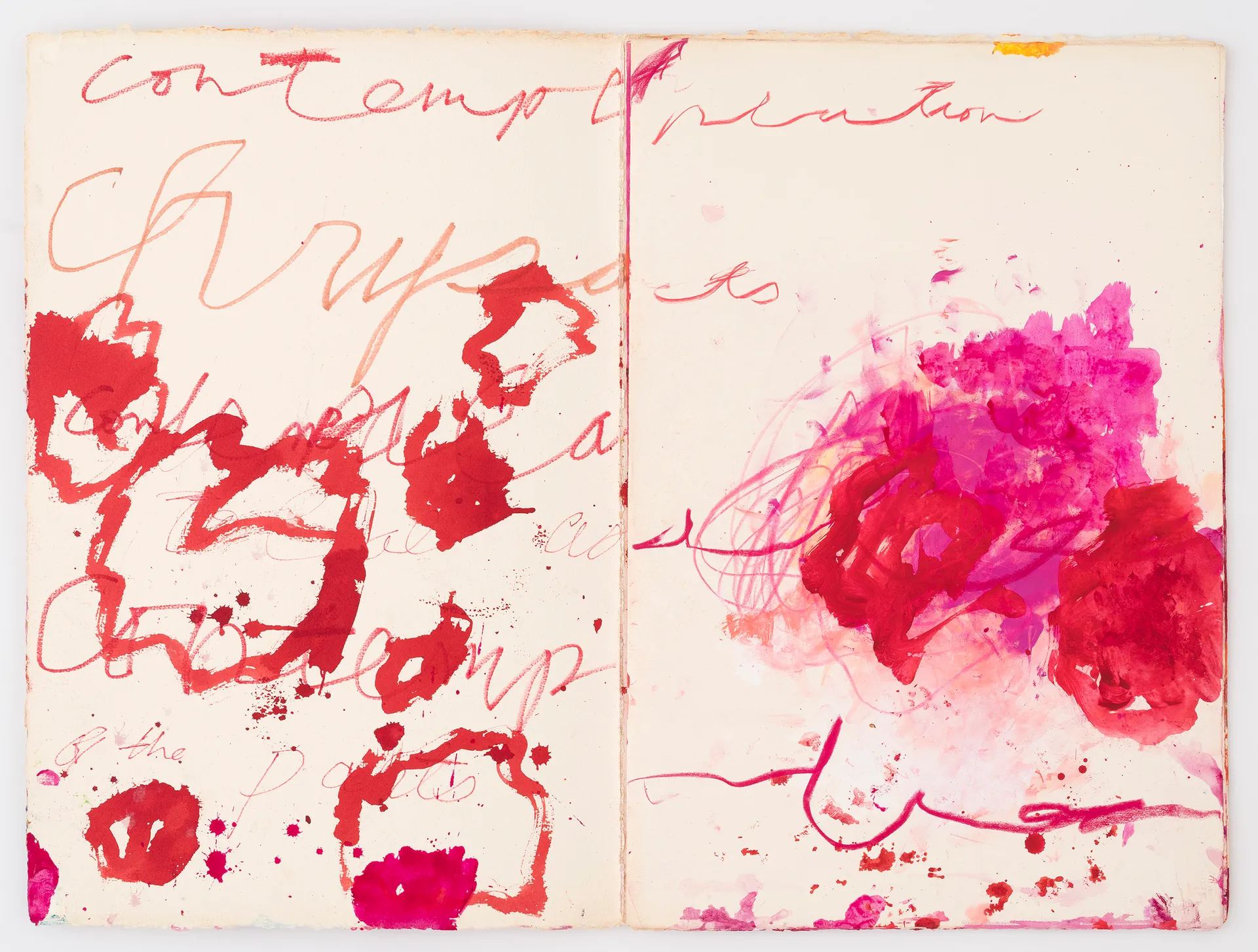
image: Cy Twombly, Untitled (Contemplation of the Chrysanthemum), part of a series on paper produced between 1984 and 2002. © Cy Twombly Foundation. Photograph by Jeff McLane. Courtesy Gagosian Gallery.